Marine Viruses
Viruses are organisms that consist of a strand of DNA or RNA surrounded by a protein coating. A drop of seawater ( 1 milliliter) contains approximately 10 million viruses most of which are not harmful to humans. Viruses that attack bacteria in the ocean are called bacteriophage or phage for short. They attach to the exterior of the bacterial cell and inject phage DNA into the host bacterial cell. The phage DNA can inactivate the bacterial DNA and begin making numerous copies of phage within the bacterial cell. Finally the bacteria cell bursts open releasing these new phage which will infect other bacteria. Another scenario is that during the initial infection, the phage DNA is incorporated into the bacterial DNA so that when the bacteria normally divides, the phage is replicated.
-
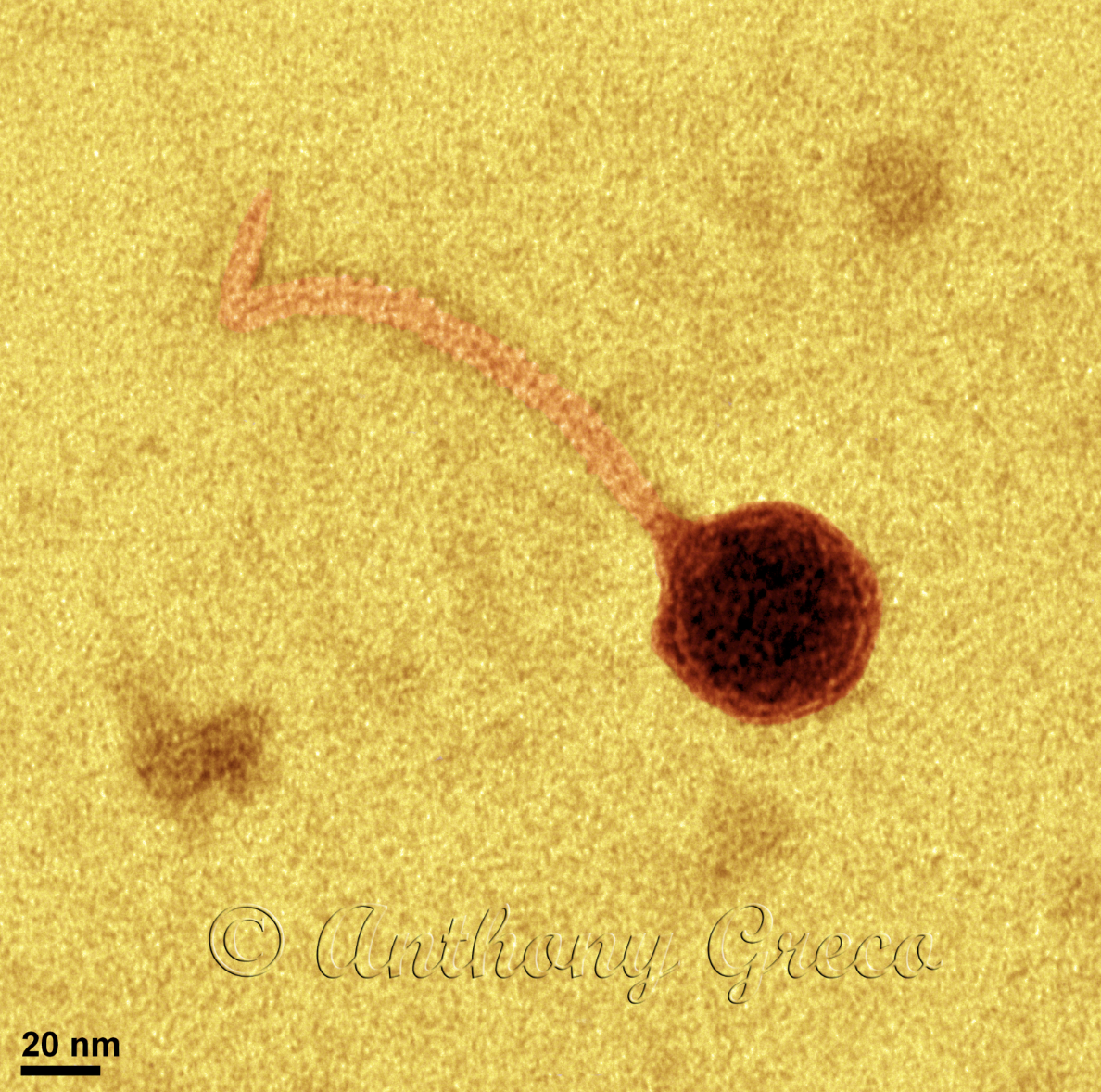
Siphoveridae virus
viral head with long tail
-
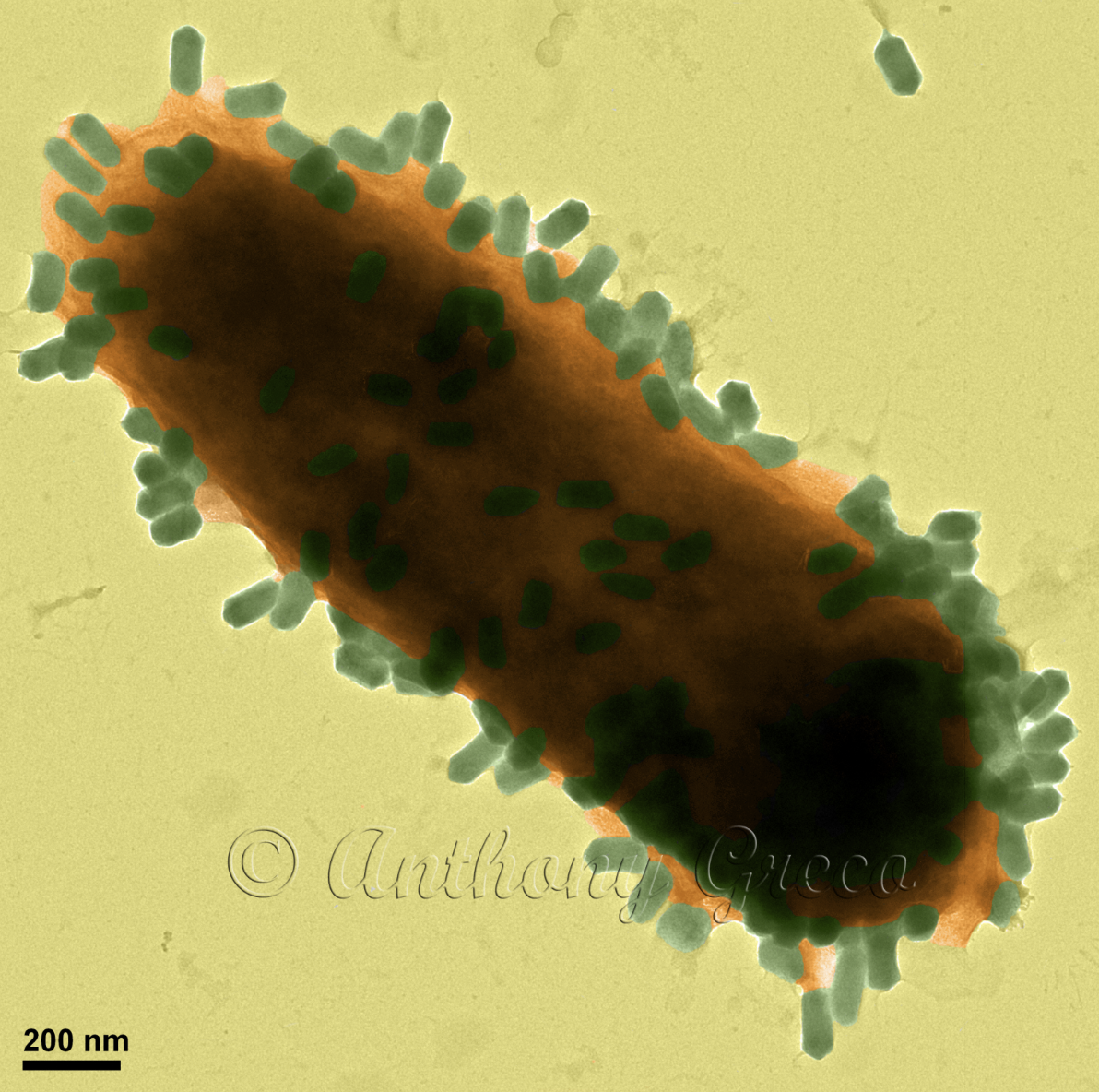
viruses (phage) in green attacking the large bacterial cell (in orange)
-
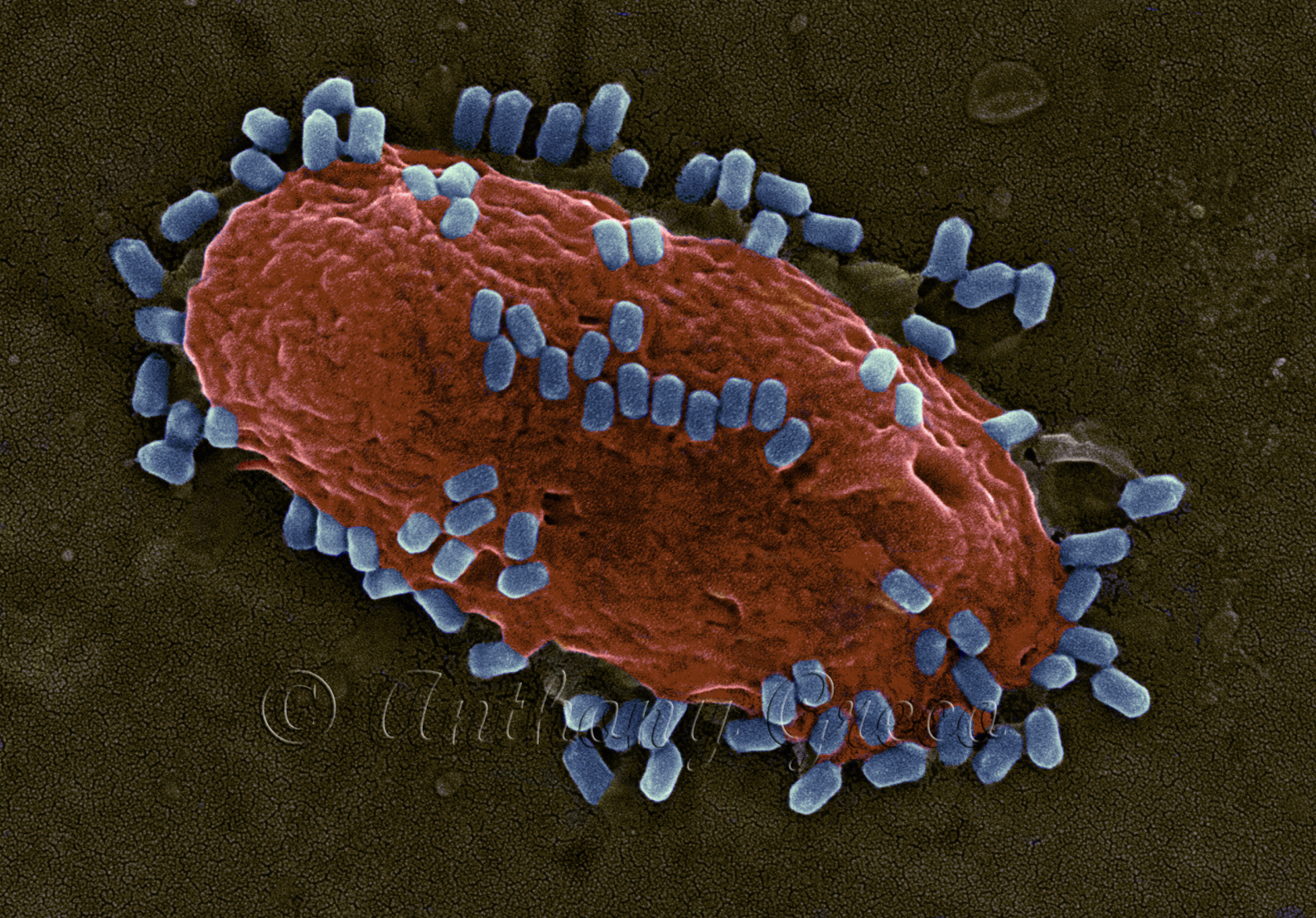
SEM image of bacterial cell (pink) being attacked by viruses (phage ) in blue
SEM image of bacterial cell (in red) being attacked by viruses (phage ) in blue
-
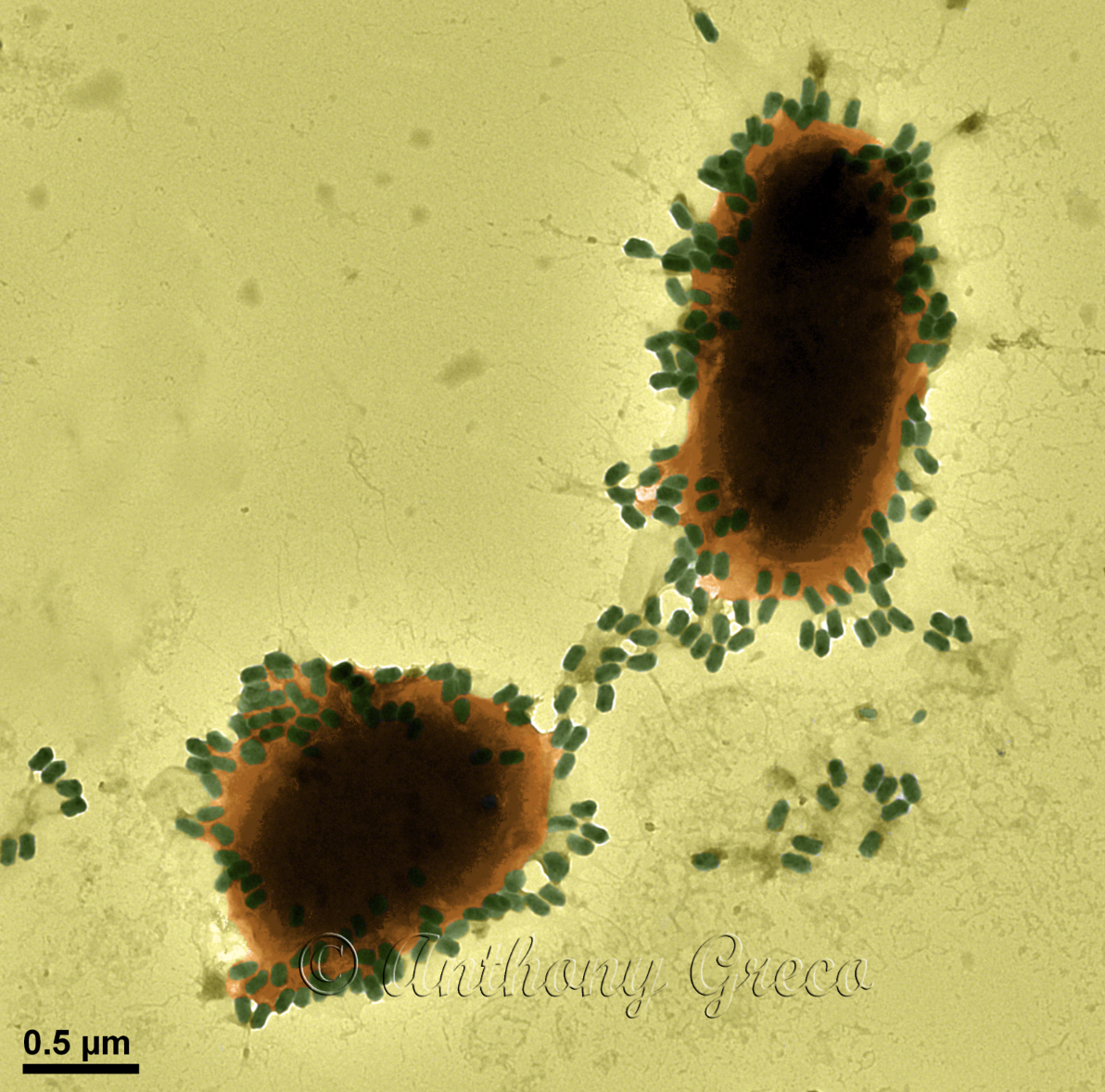
Two bacterial cells (in orange) being infected by multiple viruses (phage) in green
-
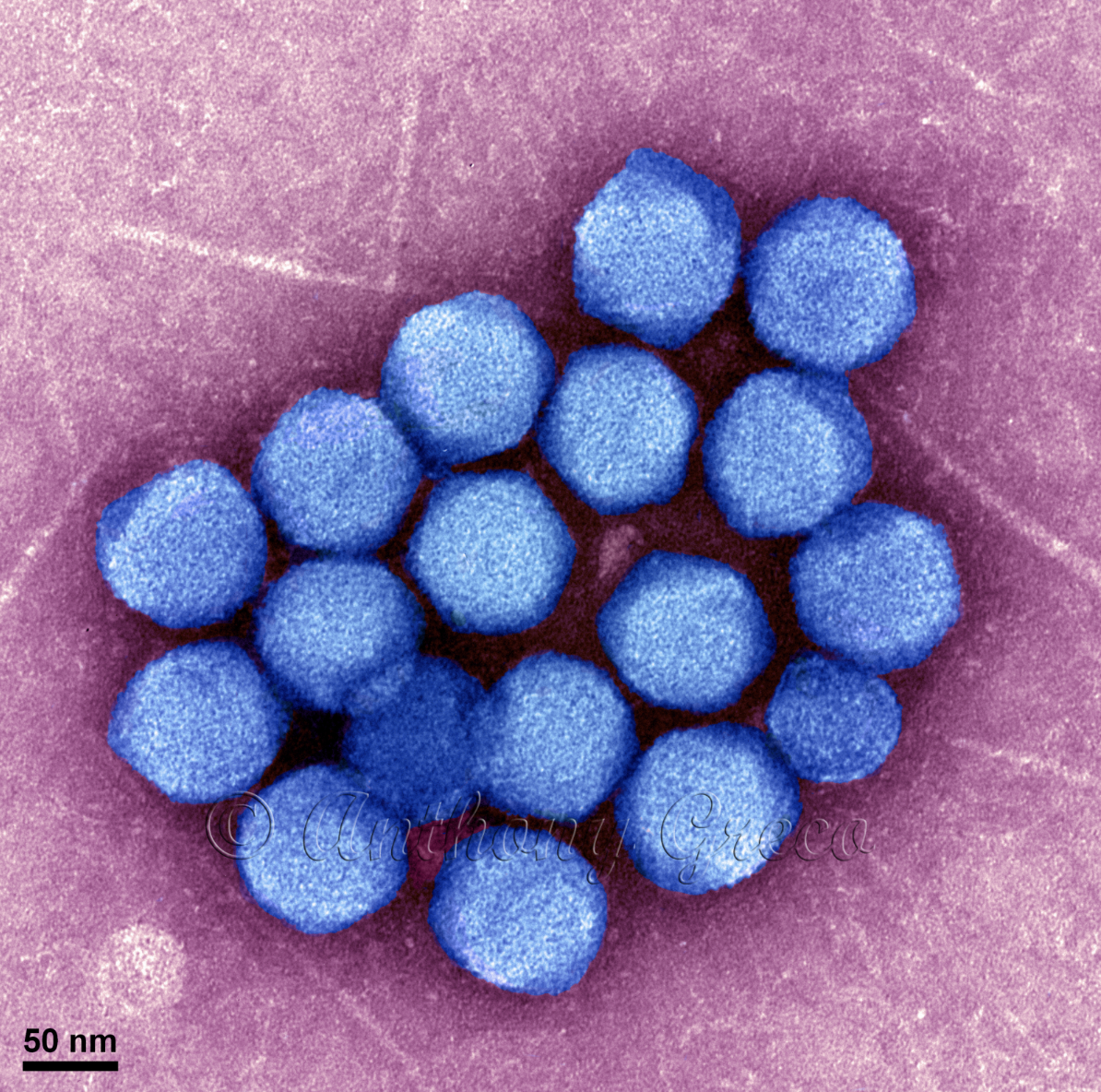
viral cluster showing icosahedral capsids
-
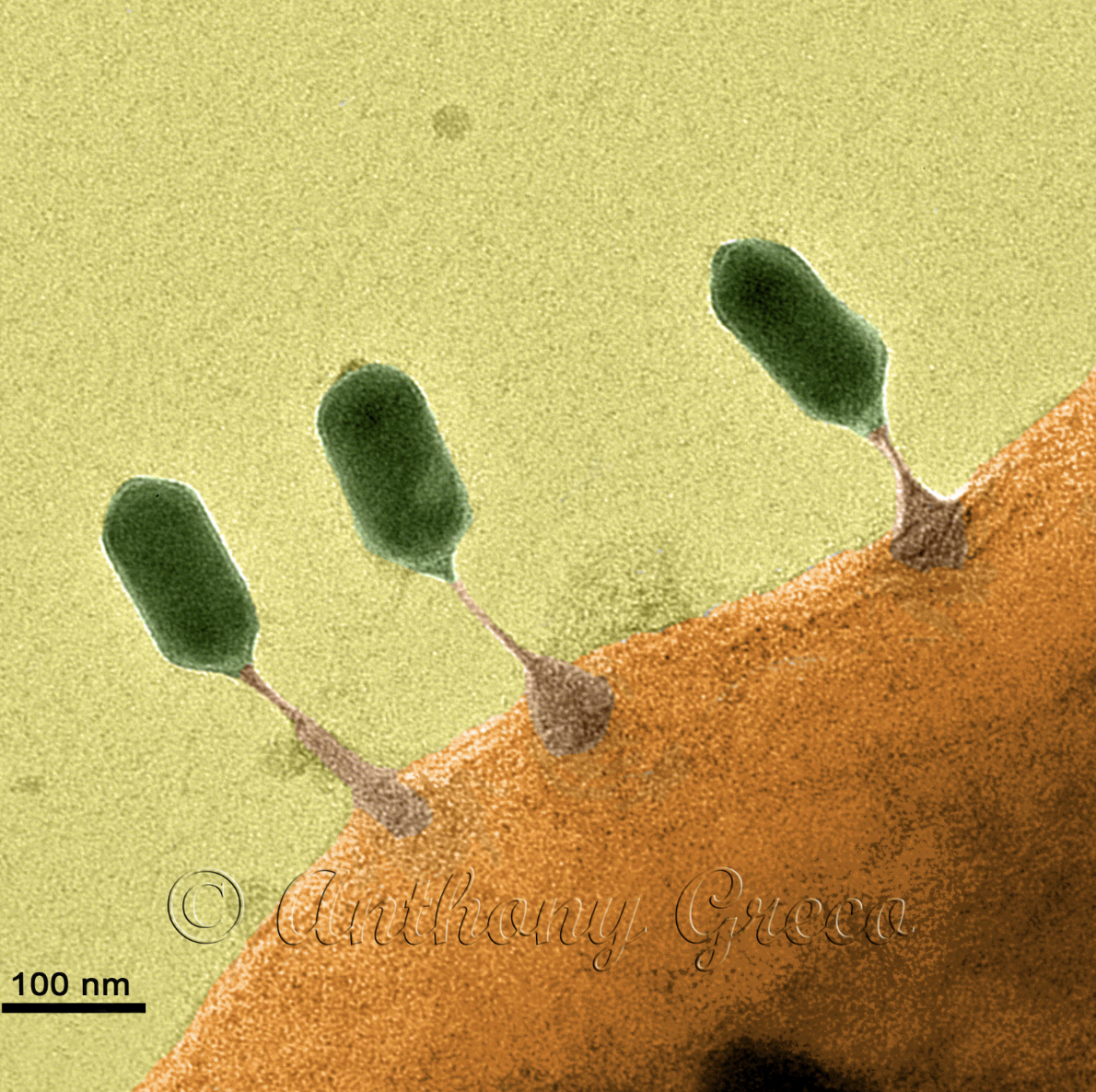
Closeup of 3 viruses (phage) in green attacking bacterial cell
-
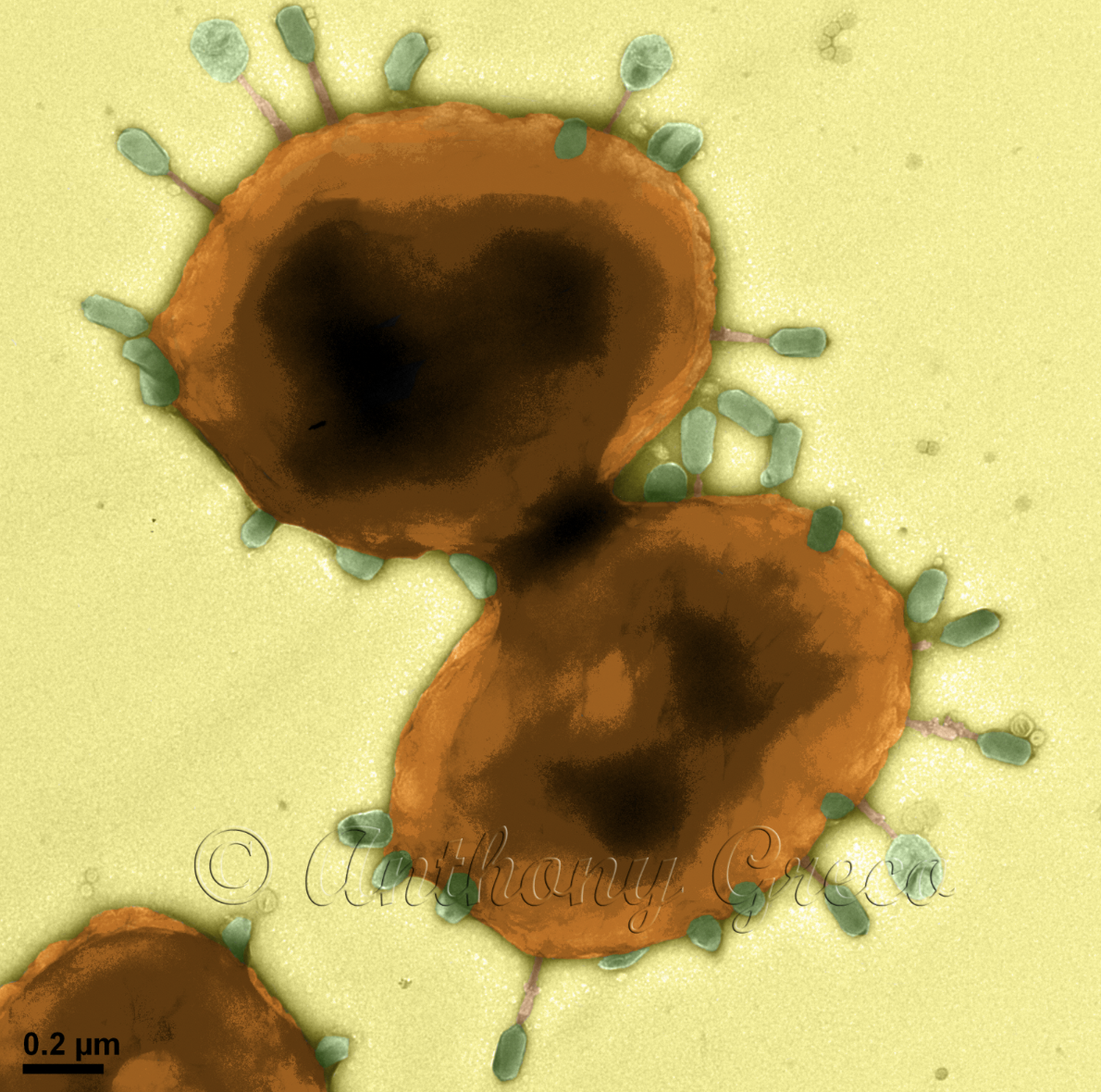
Two bacterial cells (in orange) being infected by multiple viruses (phage) in green