Acantharians
The acantharians are planktonic protozoans that are unique in that their shell is composed of strontium sulphate (celestite). Their morphology consists of 20 spines emanating from a single point inside the shell. These organisms are not found in the fossil record since seawater is undersaturated with respect to strontium. When these organisms die, they quickly dissolve. Short term traps must be used to collect them. They also undergo an encystment stage where the spines are retracted and a cyst is produced made of platelets of strontium sulphate.
-
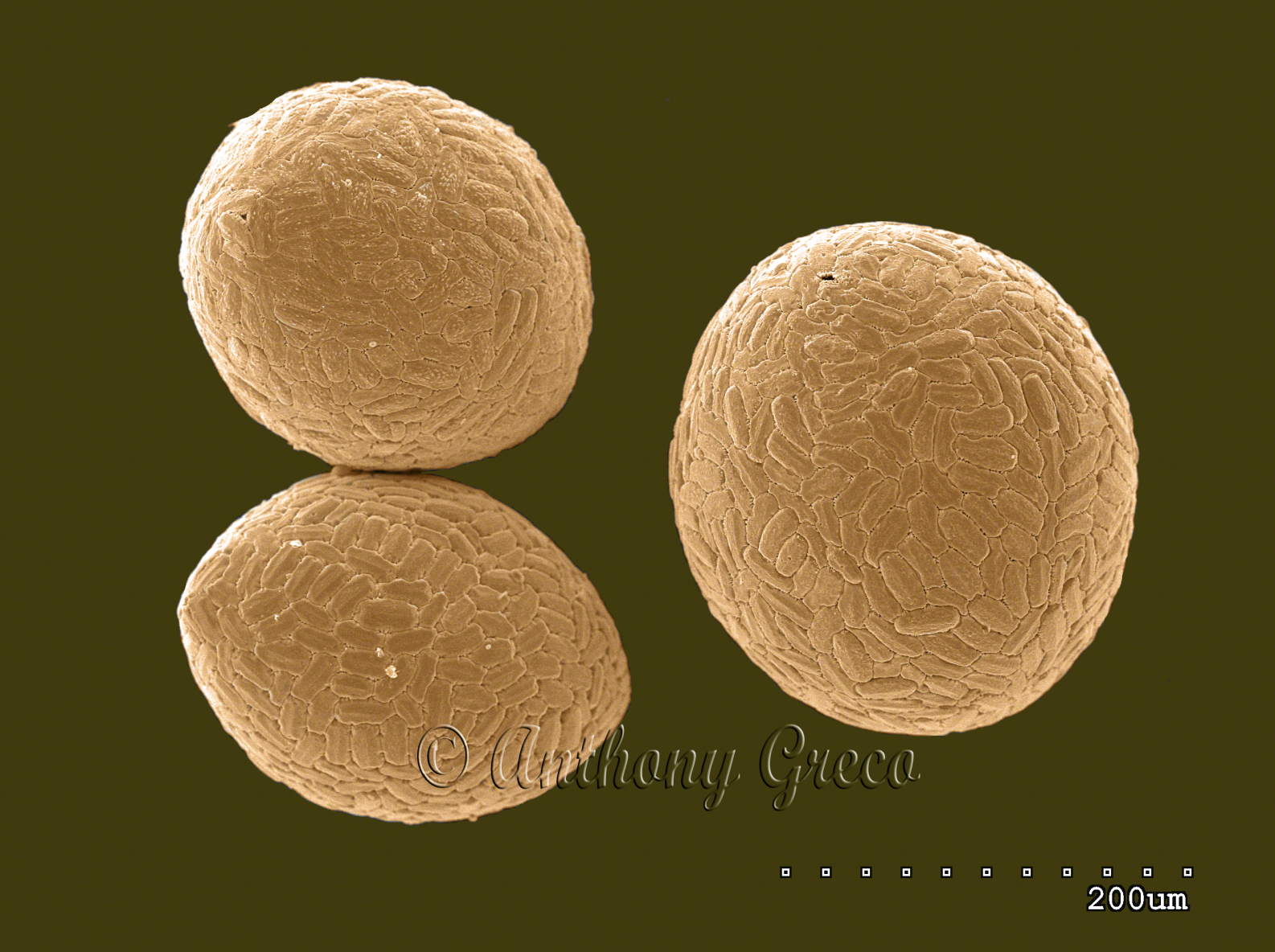
Acantharian cysts
Strontium sulphate plates make up the exterior
-
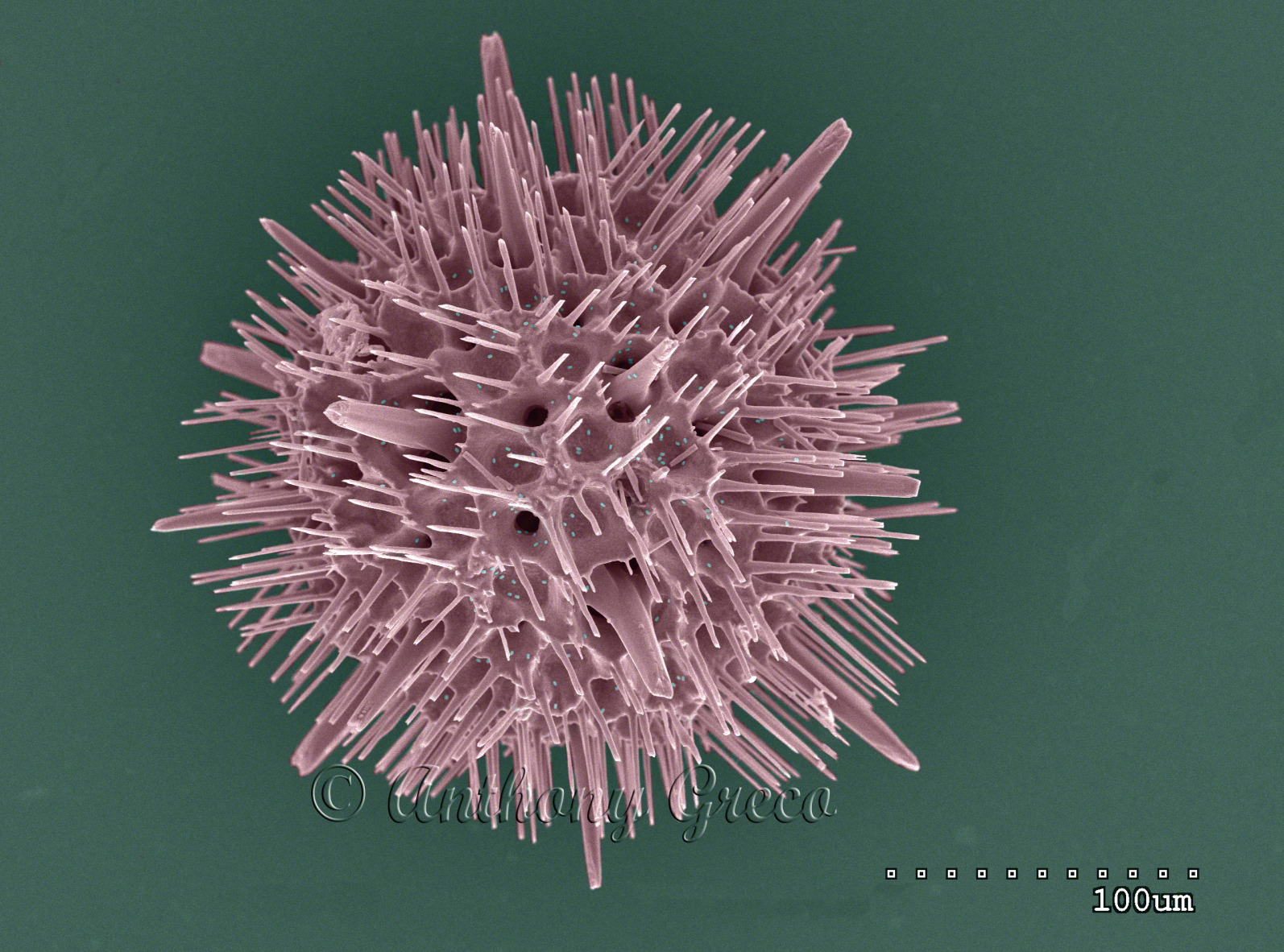
Acantharian
-
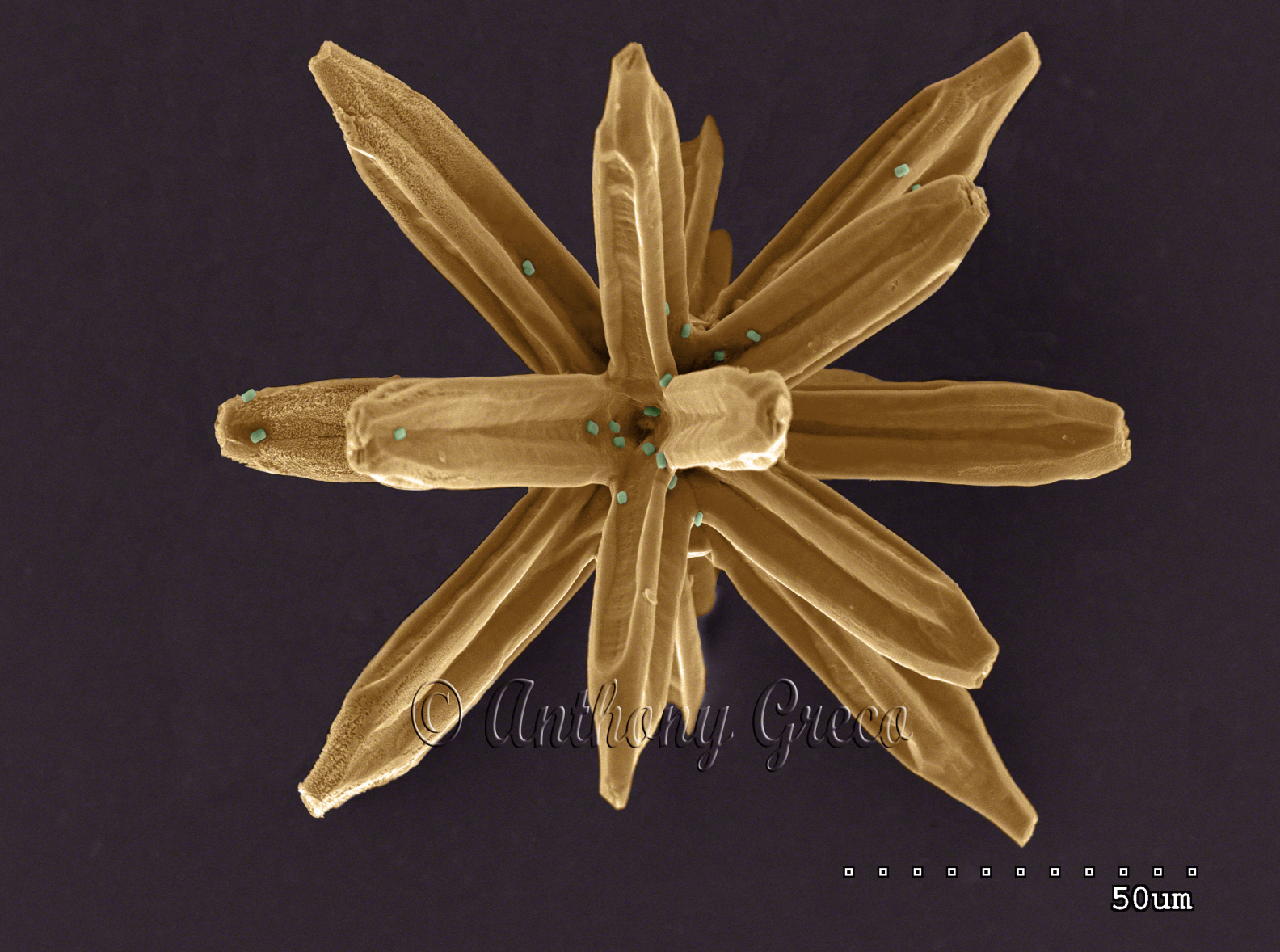
Acantharian
a scattering of green spores are present on the spines
-
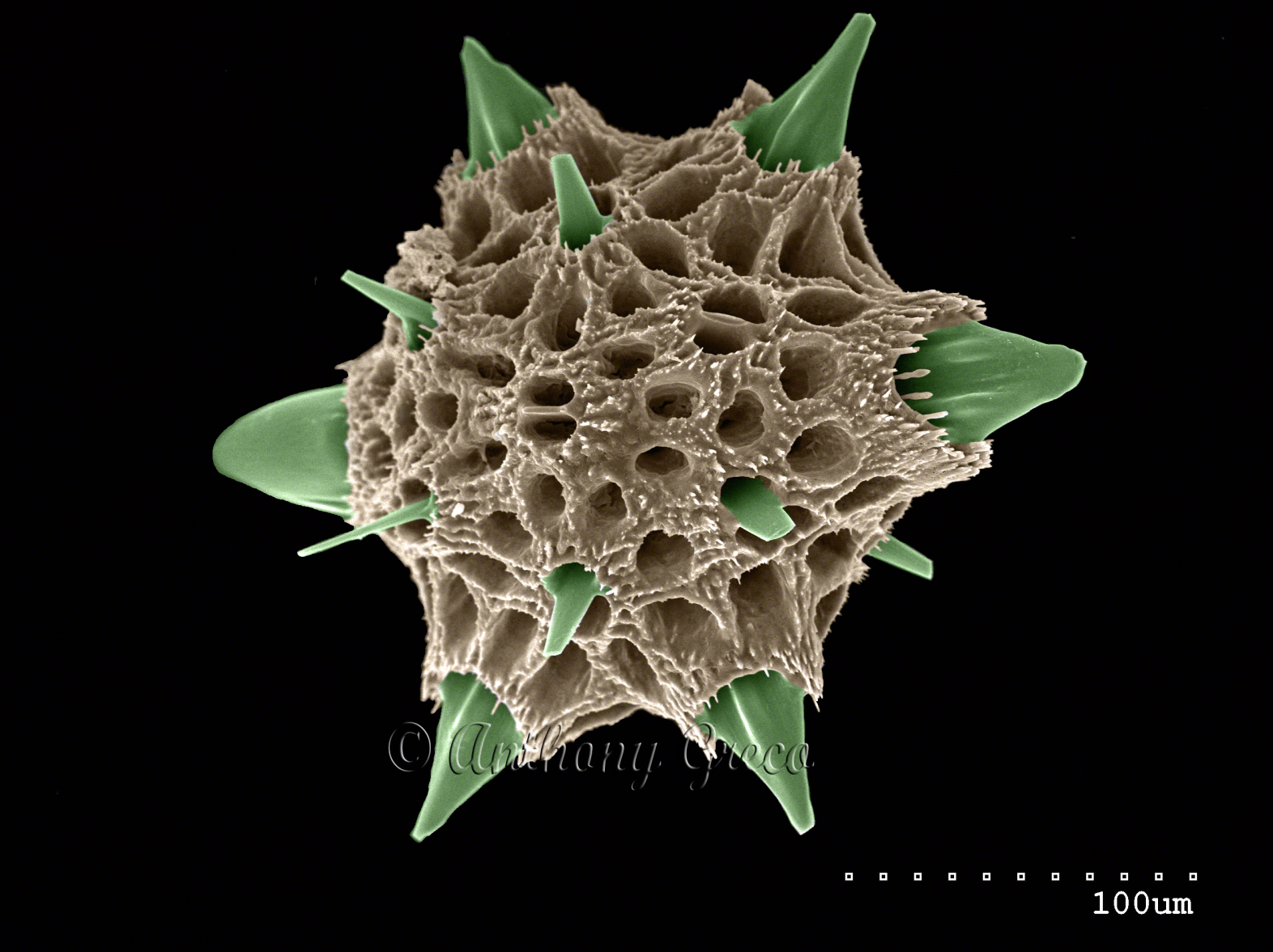
Acantharian
-
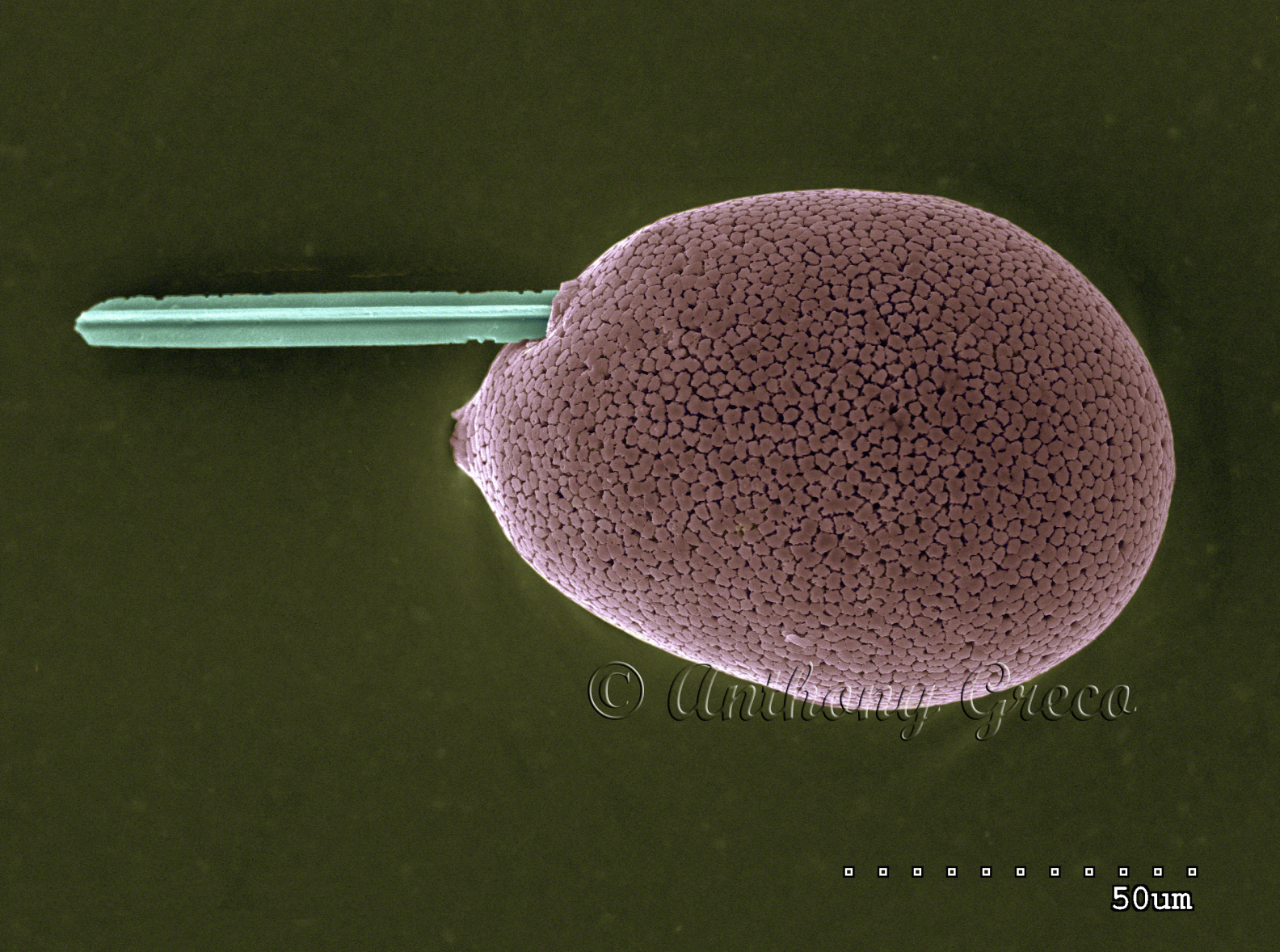
Acantharian cyst
large rigid spine located above the pore
-
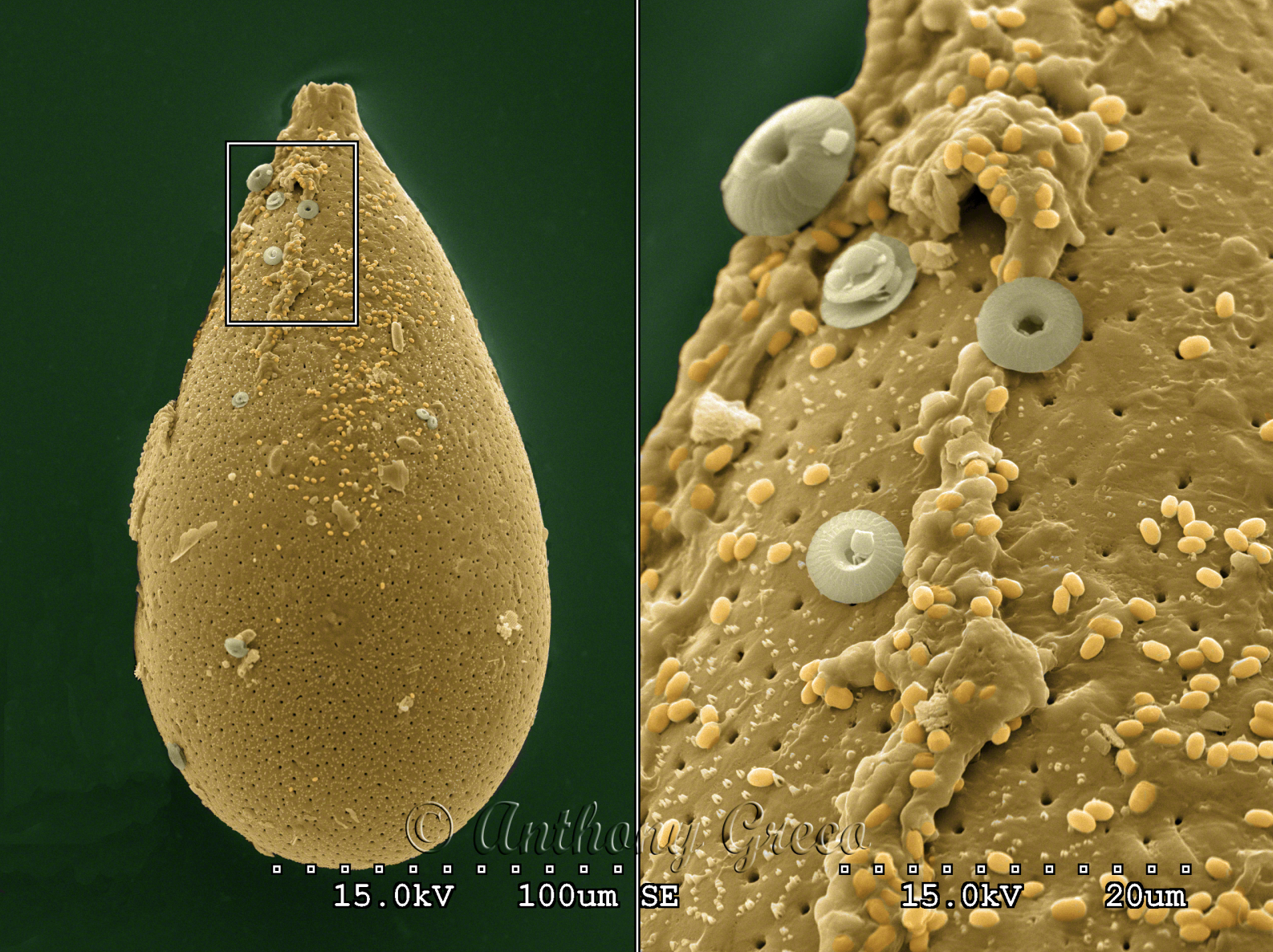
Acantharian cyst on left
enlarged image of box showing acantharian spores (orange) and coccoliths (tan) present on the surface
-
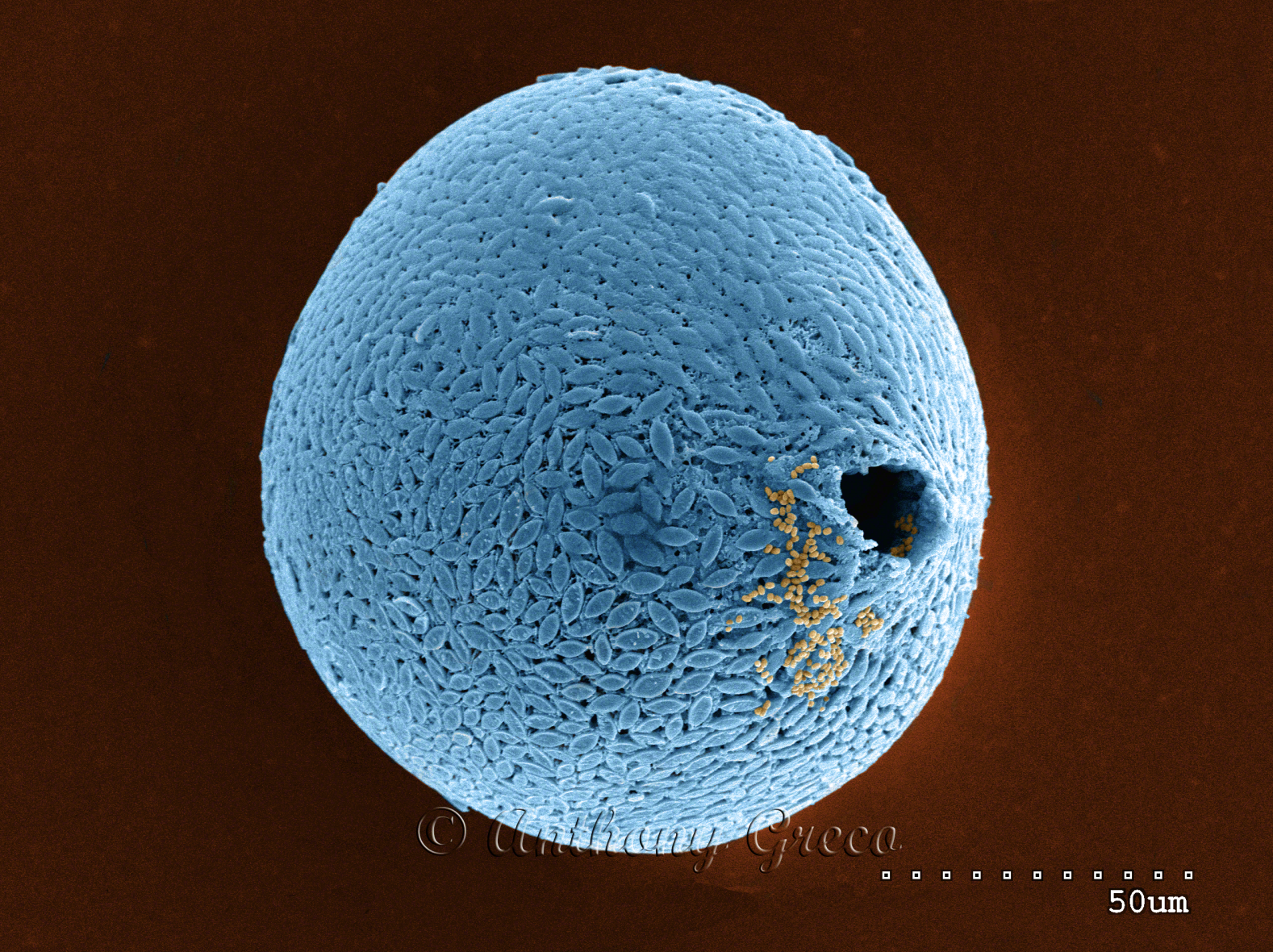
Acantharian cyst
yellow spores present near the pore opening
-
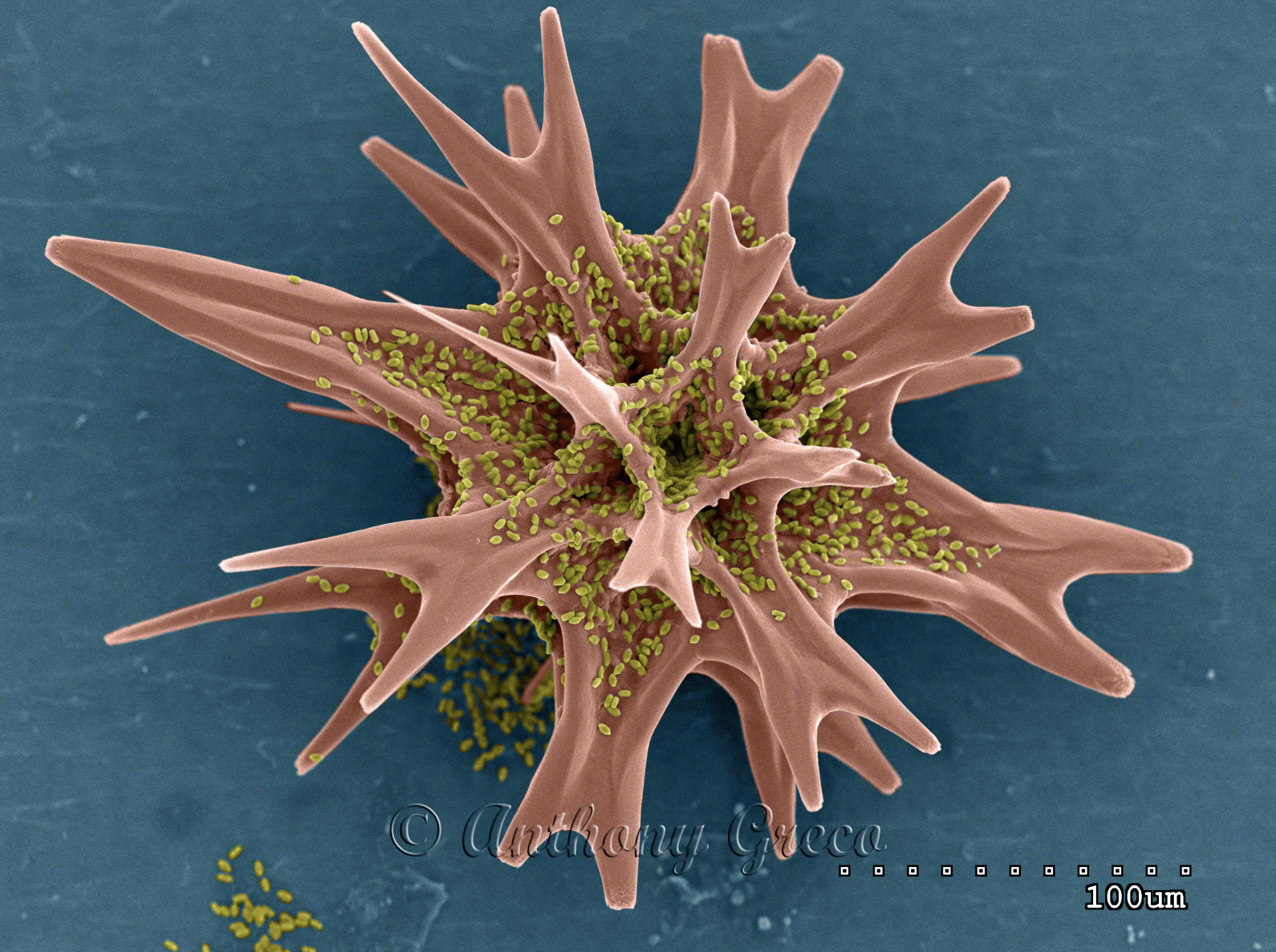
Acantharian
yellow spores cover the surface of the spines
-
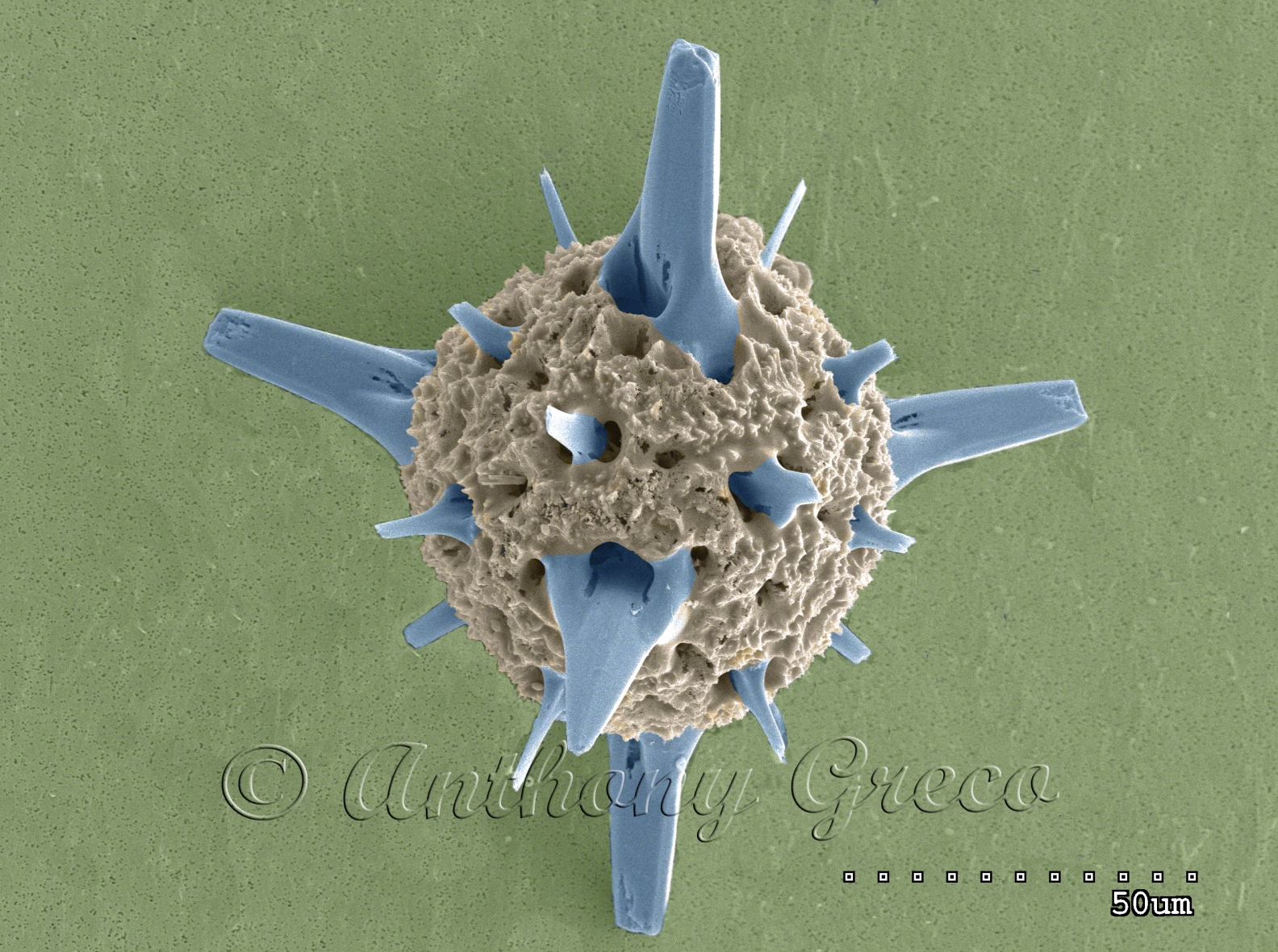
Acantharian
-
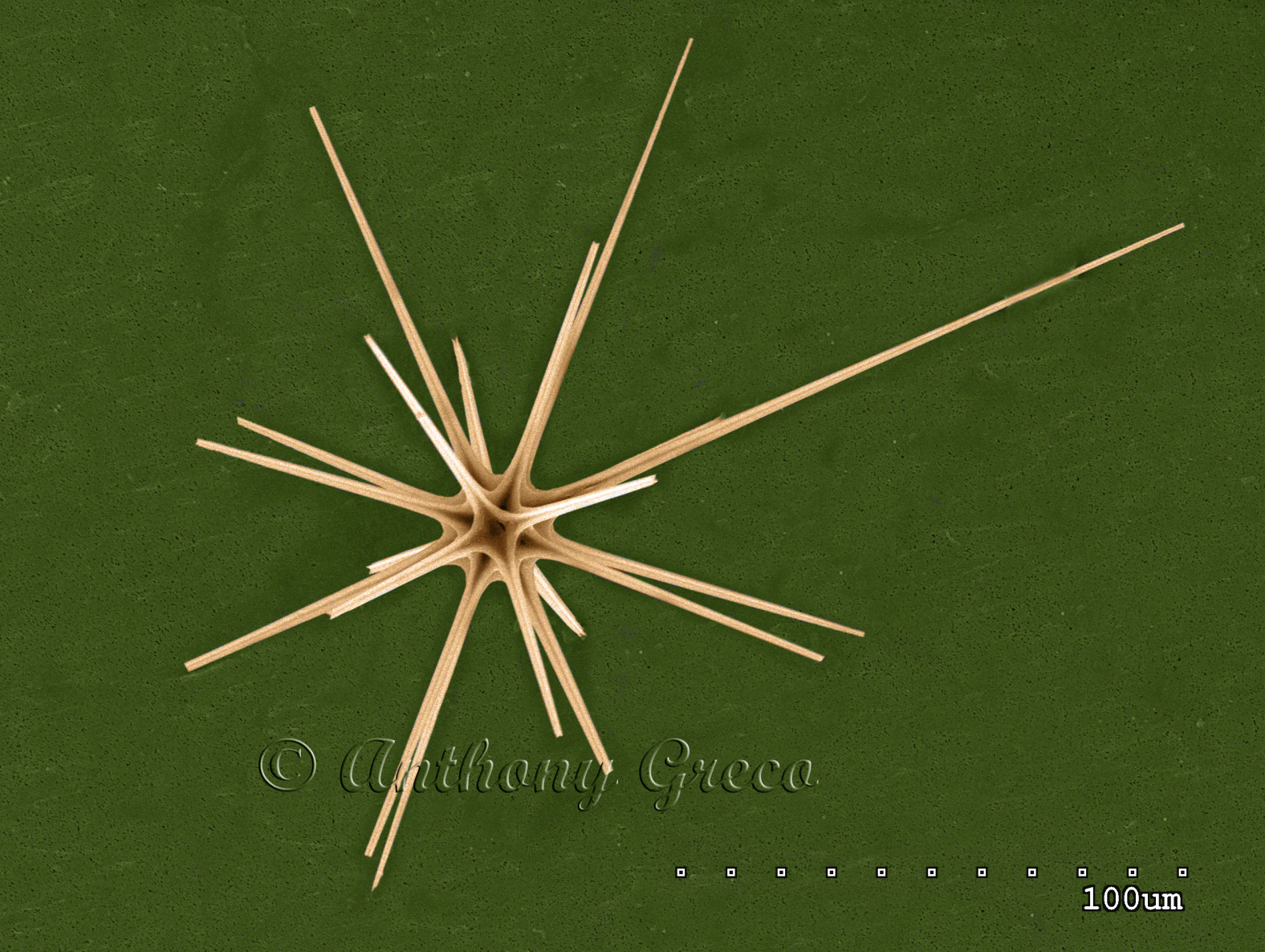
Acantharian
-
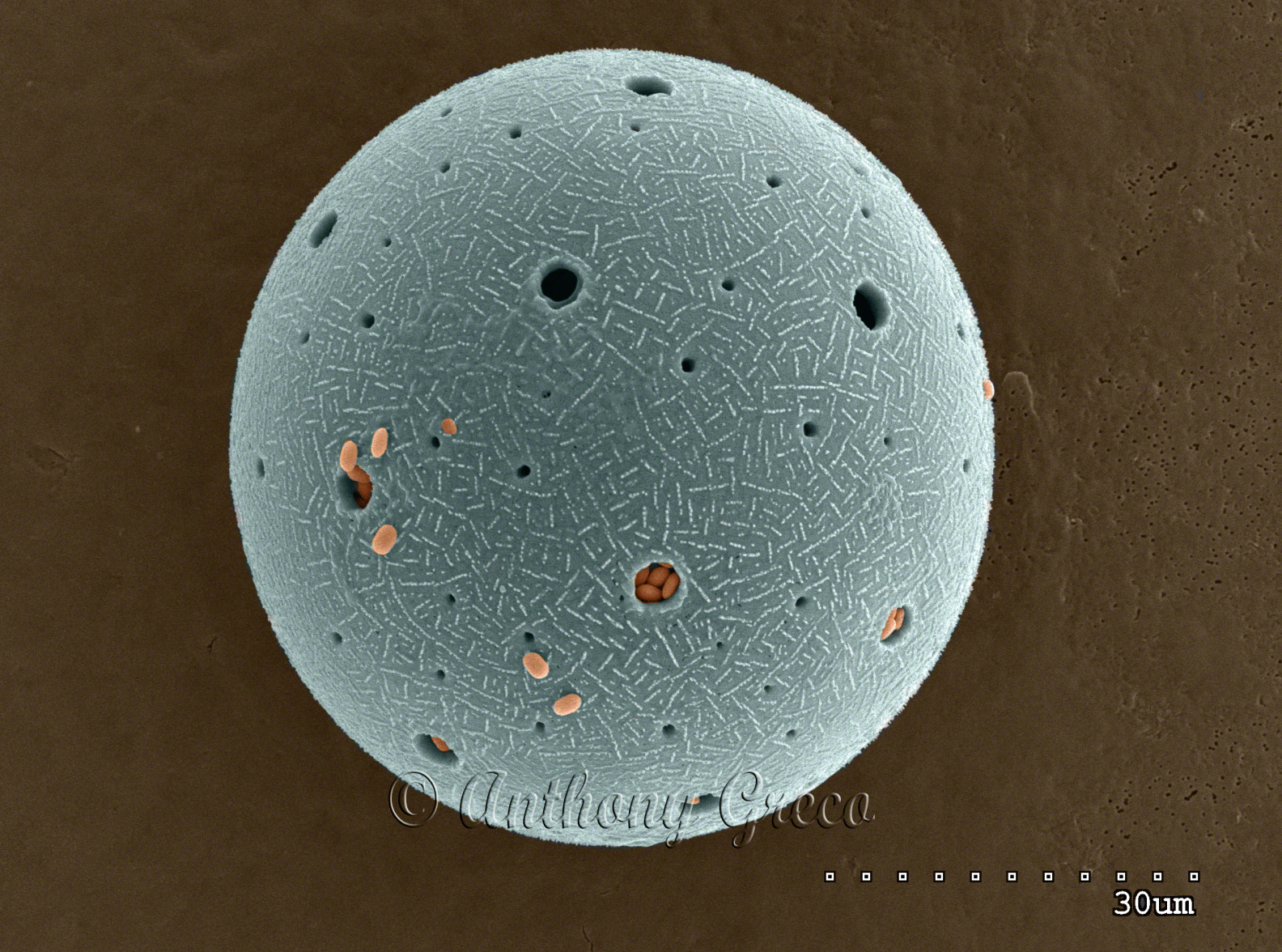
Acantharian cyst
Pink spores evident on the cyst surface and inside the large surface pores
-
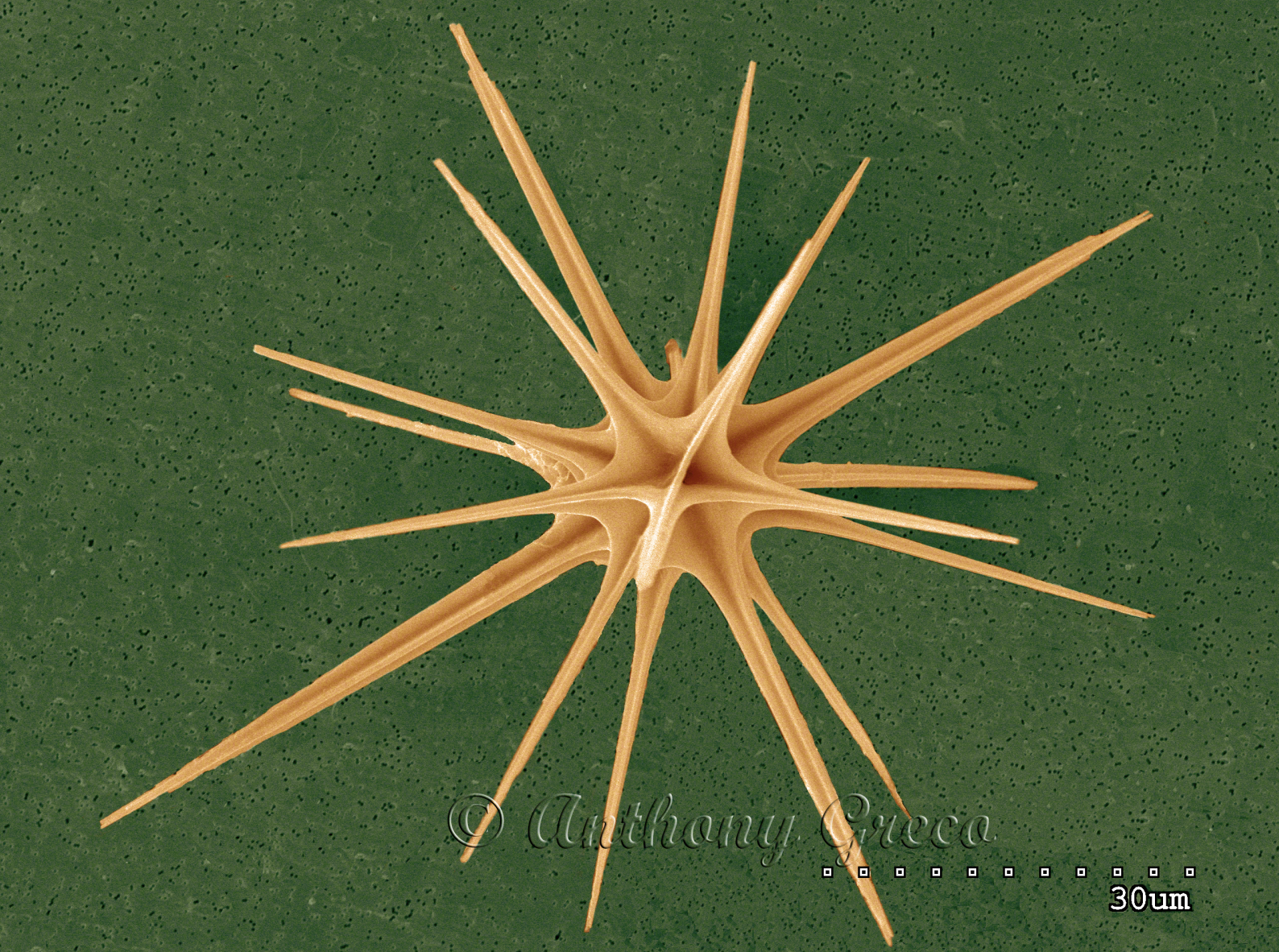
Acantharian
-
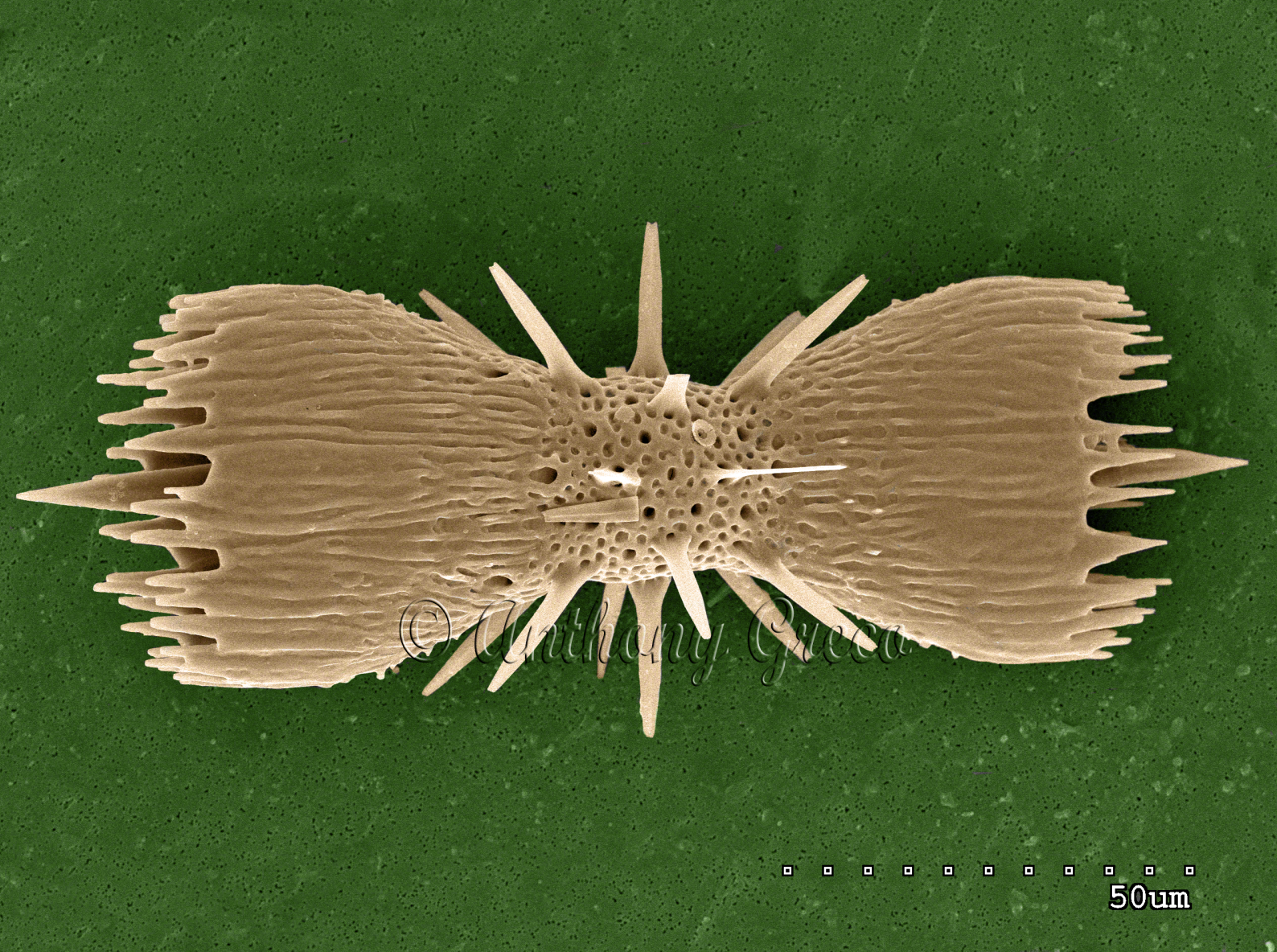
Acantharian
-
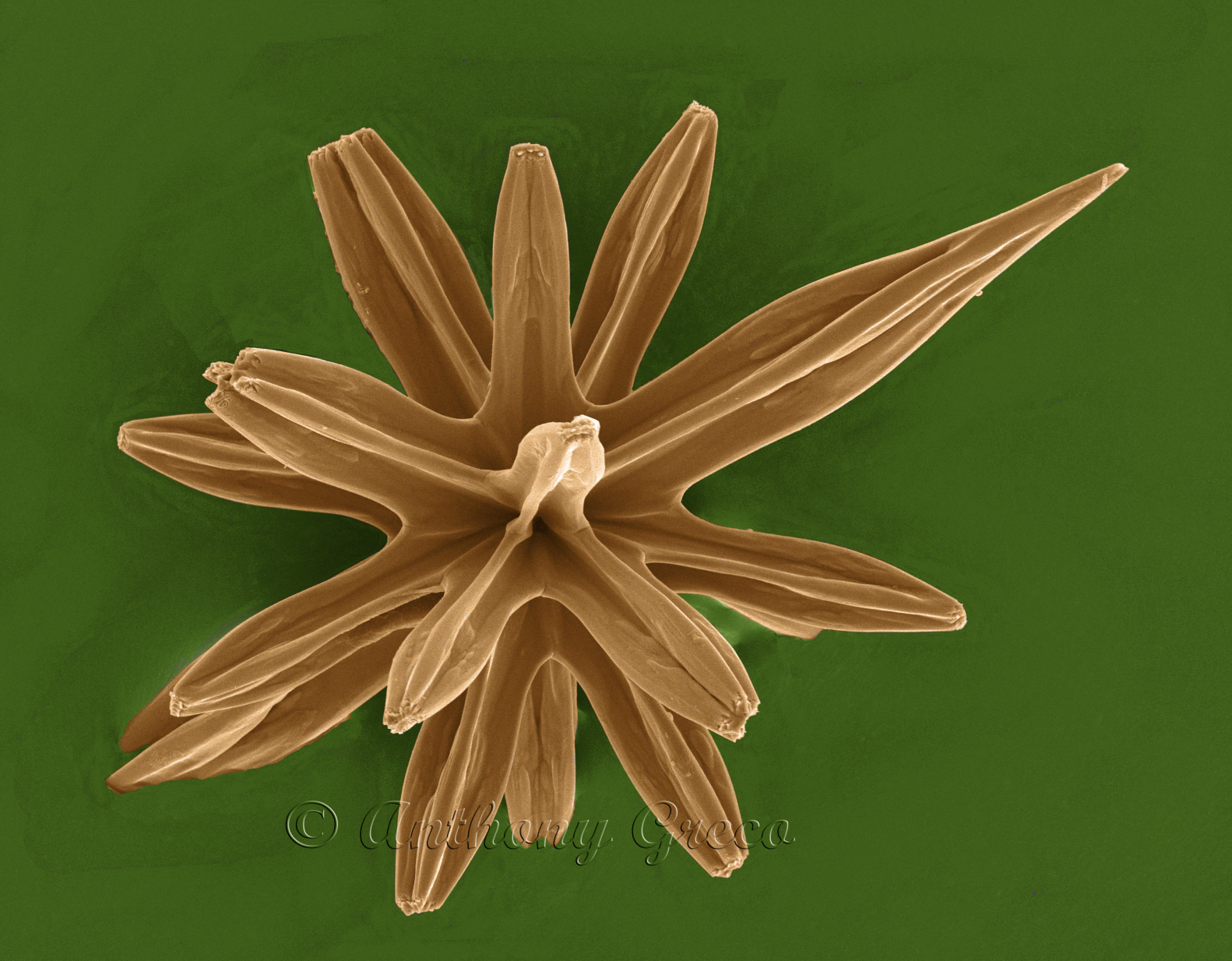
Acantharian
-
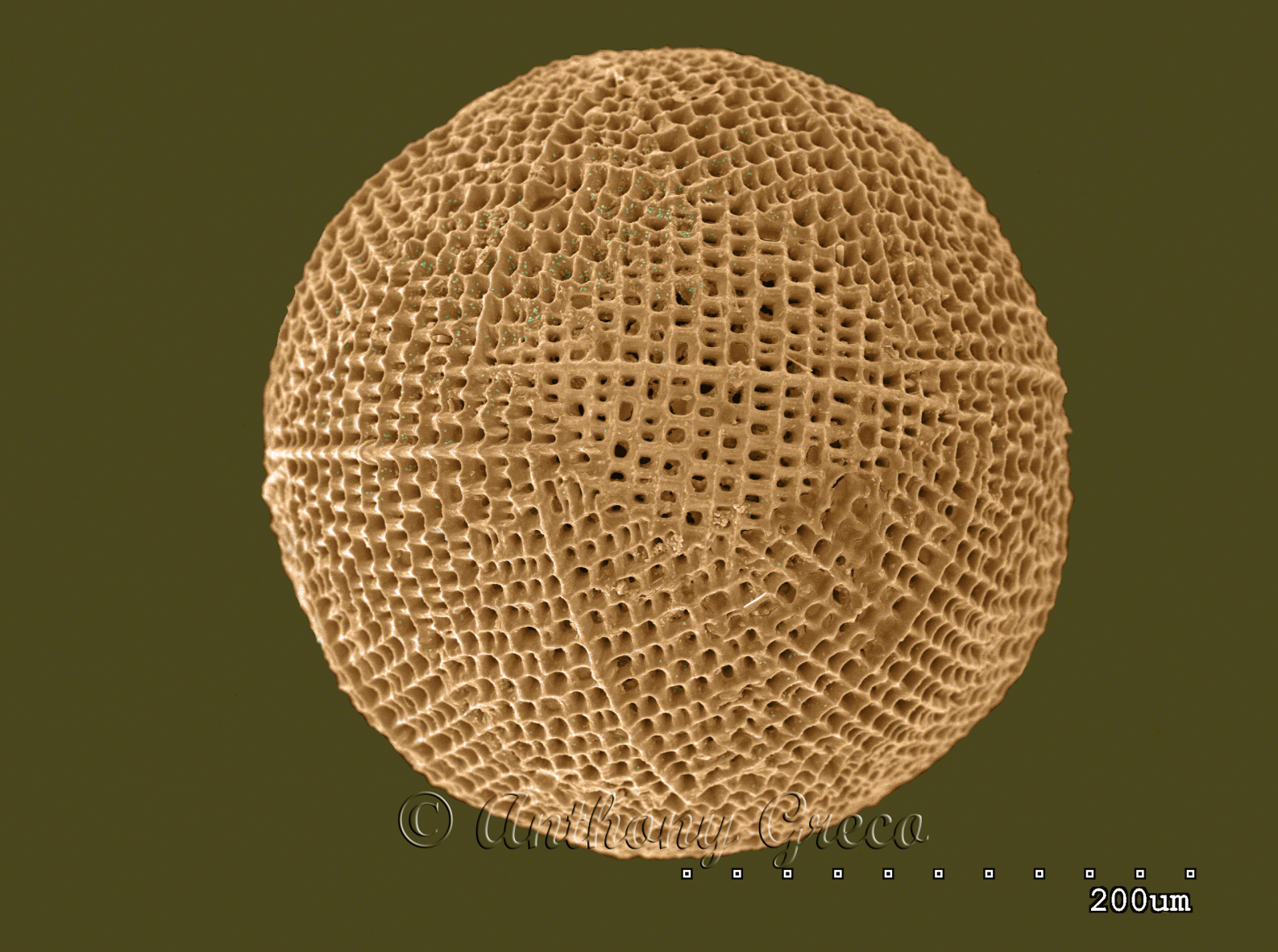
Acantharian cyst
-
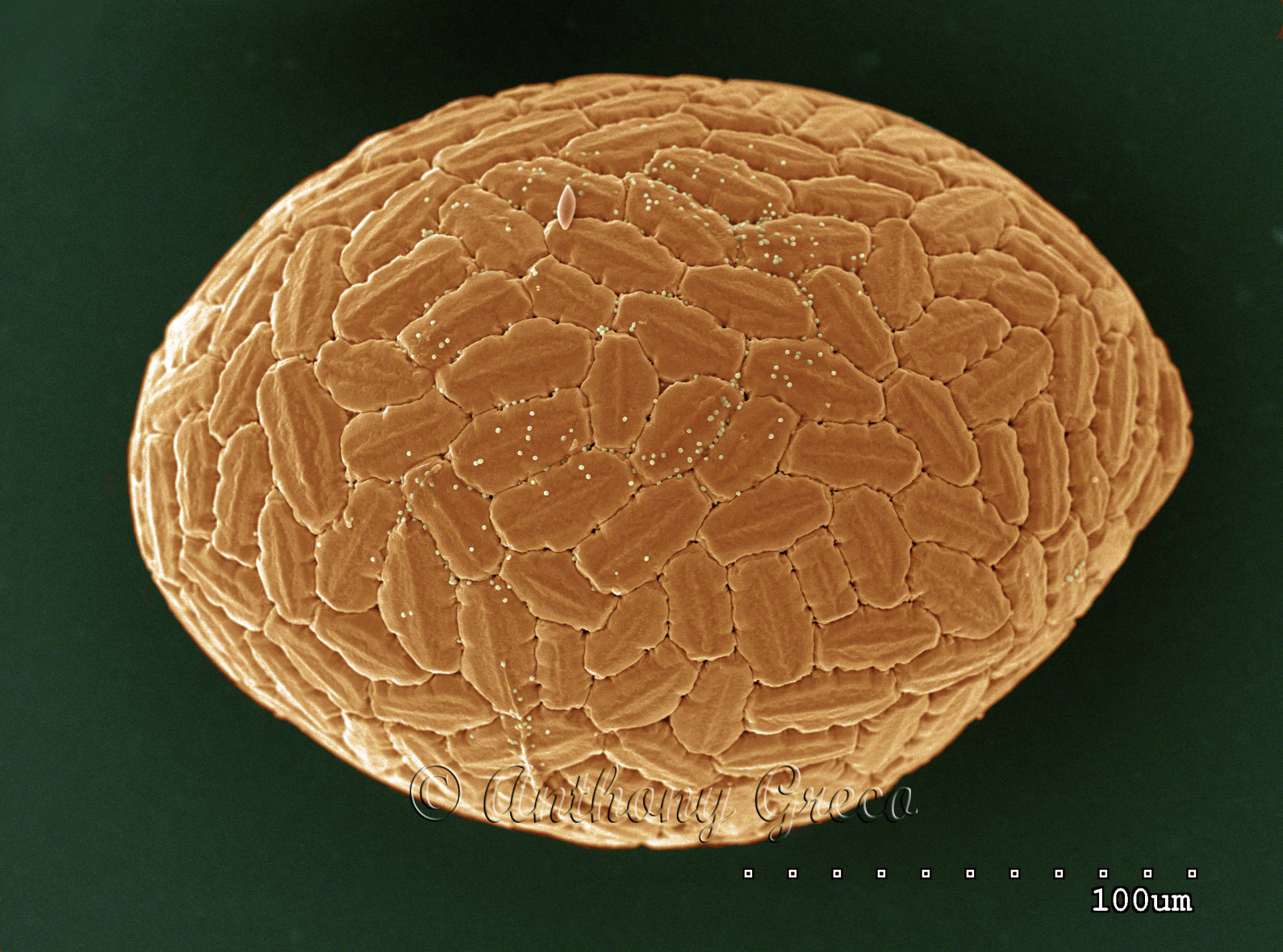
Acantharian cyst
spores (white) cover the cyst surface
-
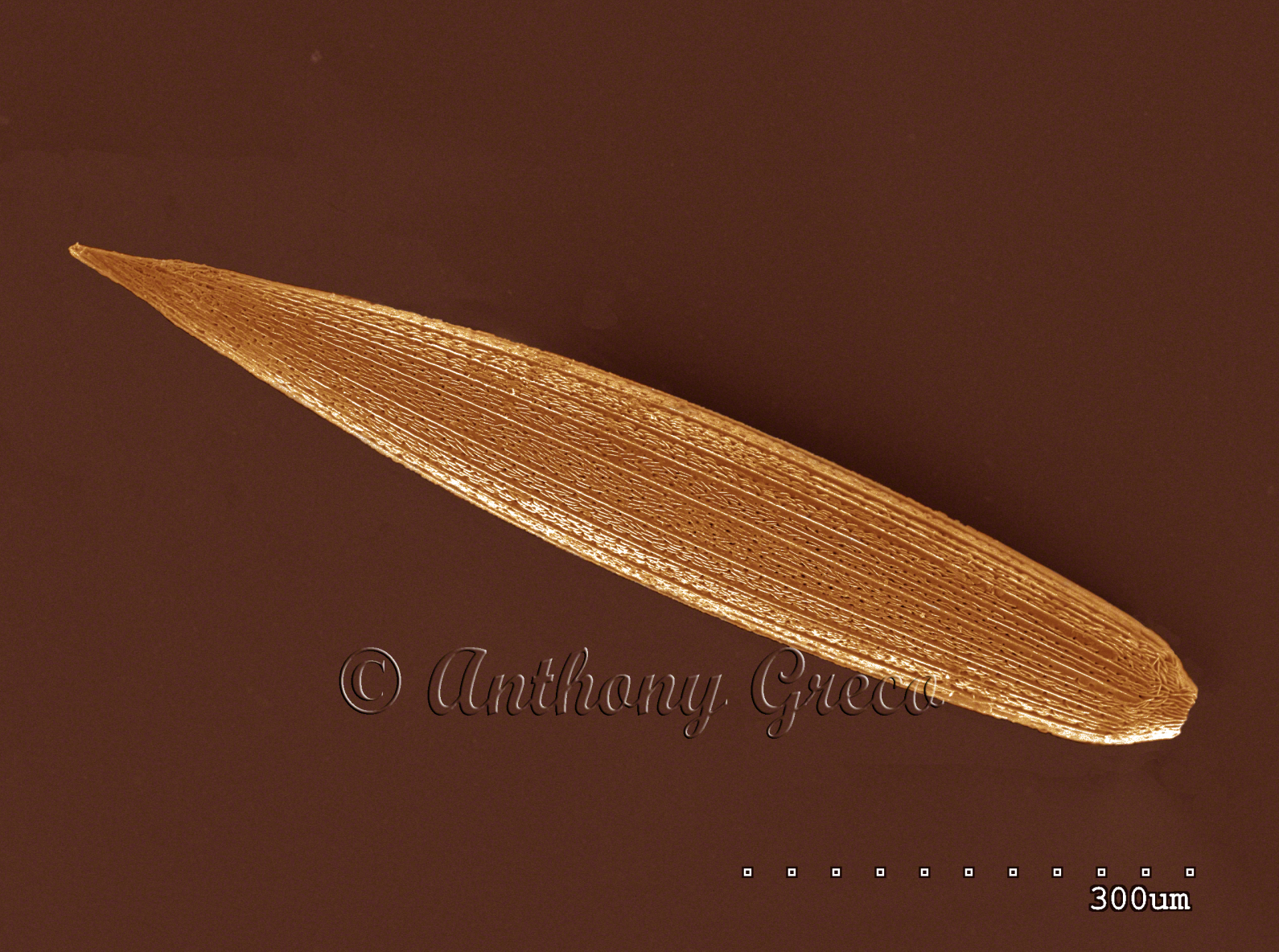
Acantharian cyst
-
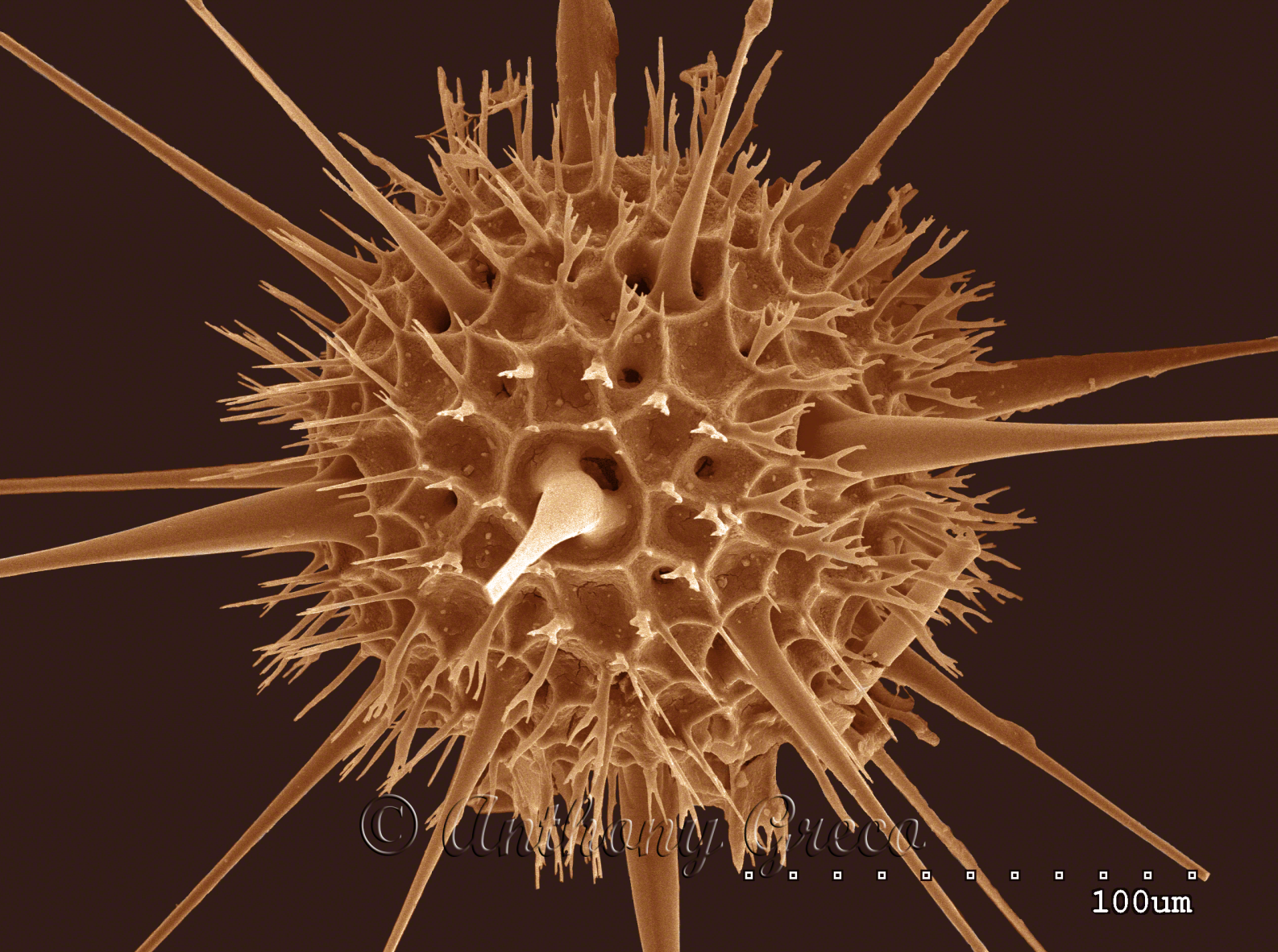
Acantharian
-
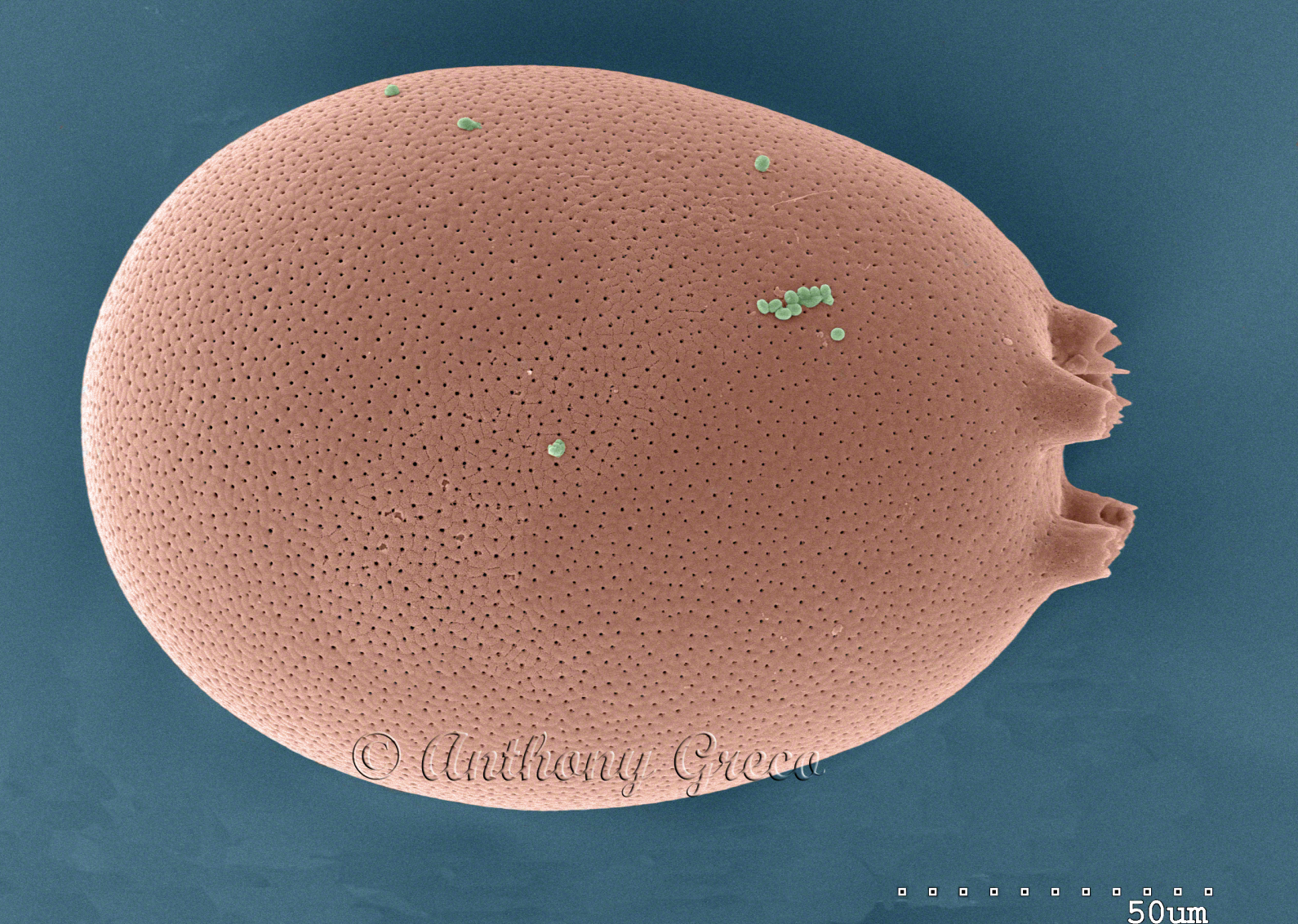
Acantharian cyst
a few green spores line the surface
-
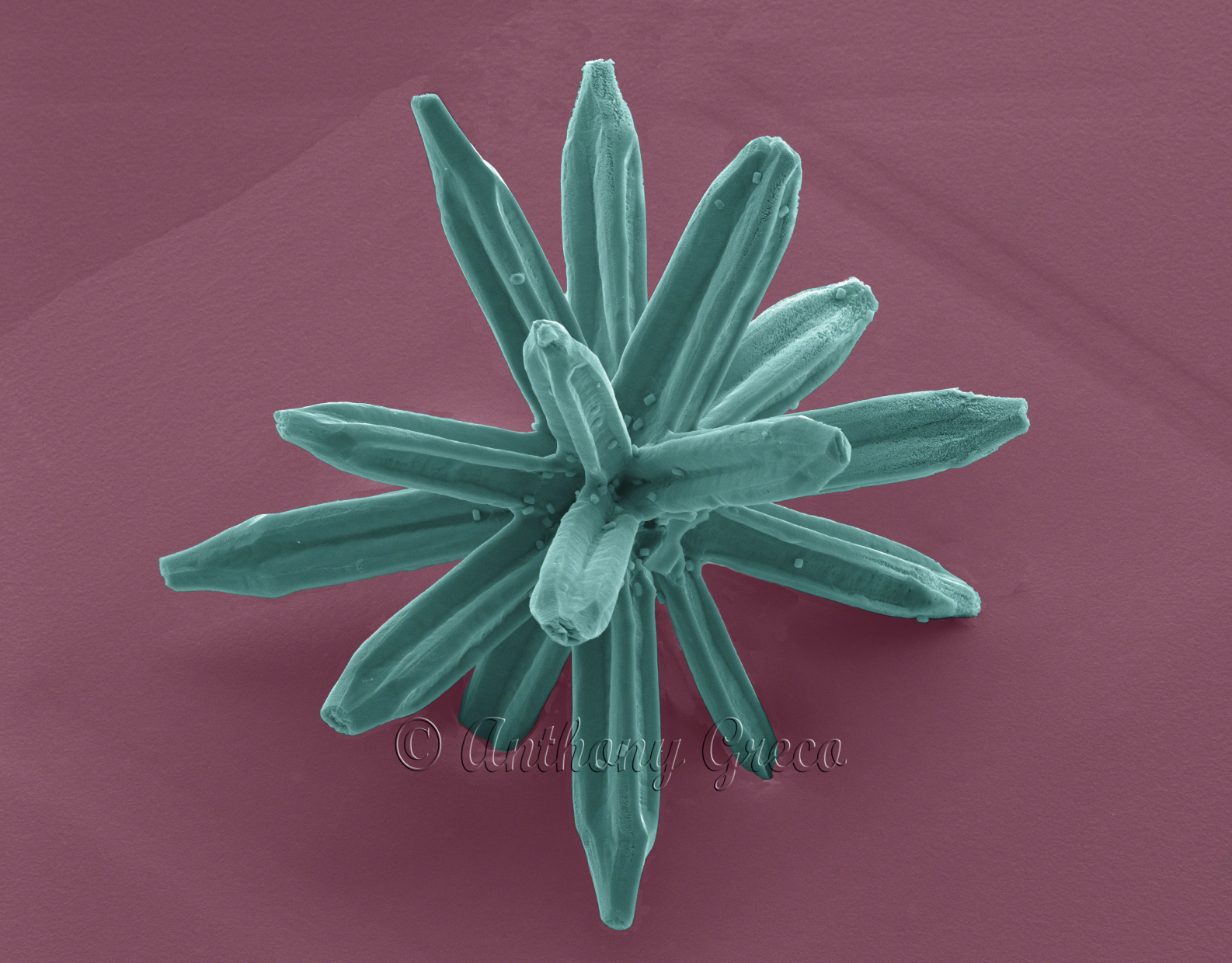
Acantharian
-
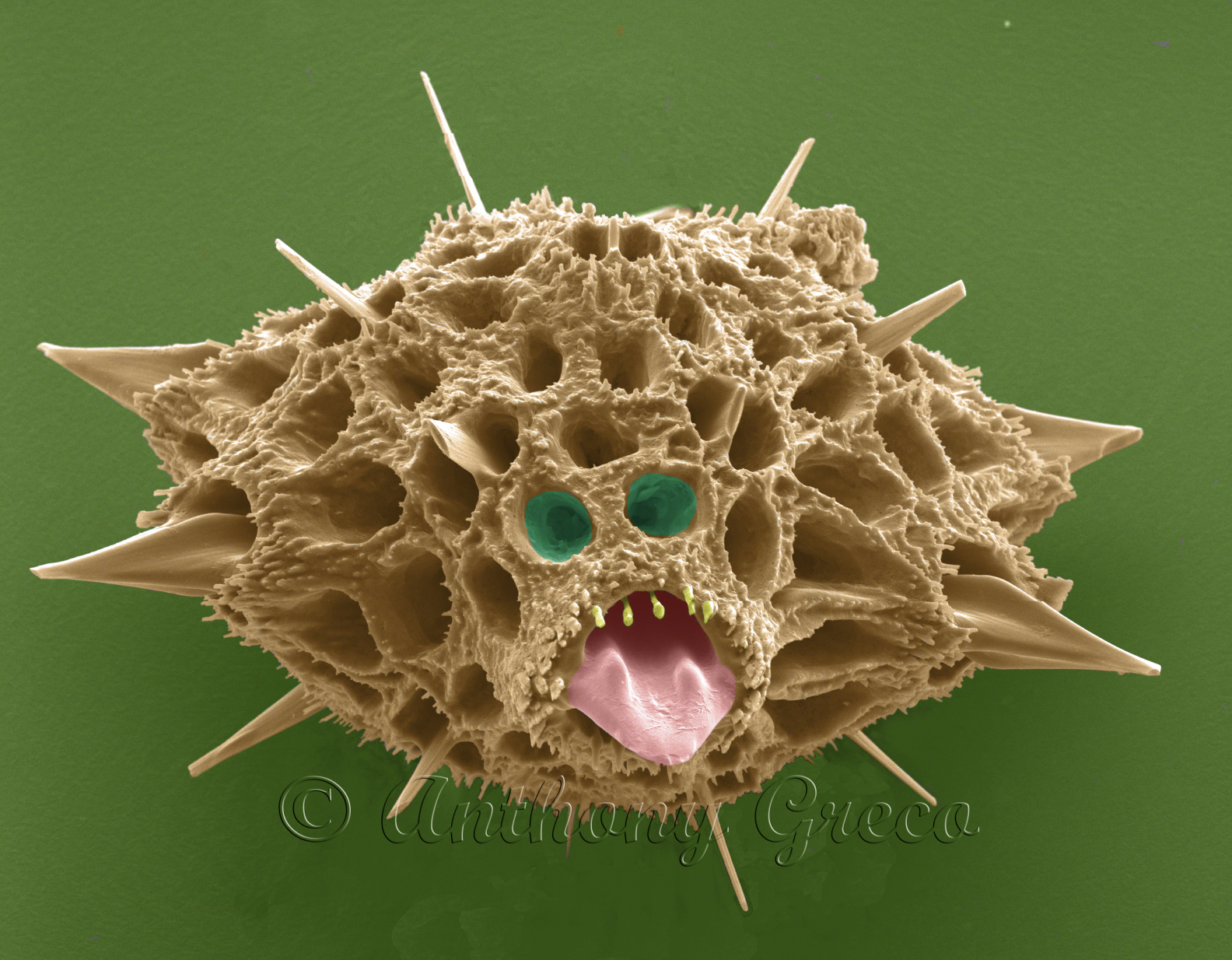
Acantharian
false color imaging makes it look like 2 eyes, yellow teeth and a tongue
-
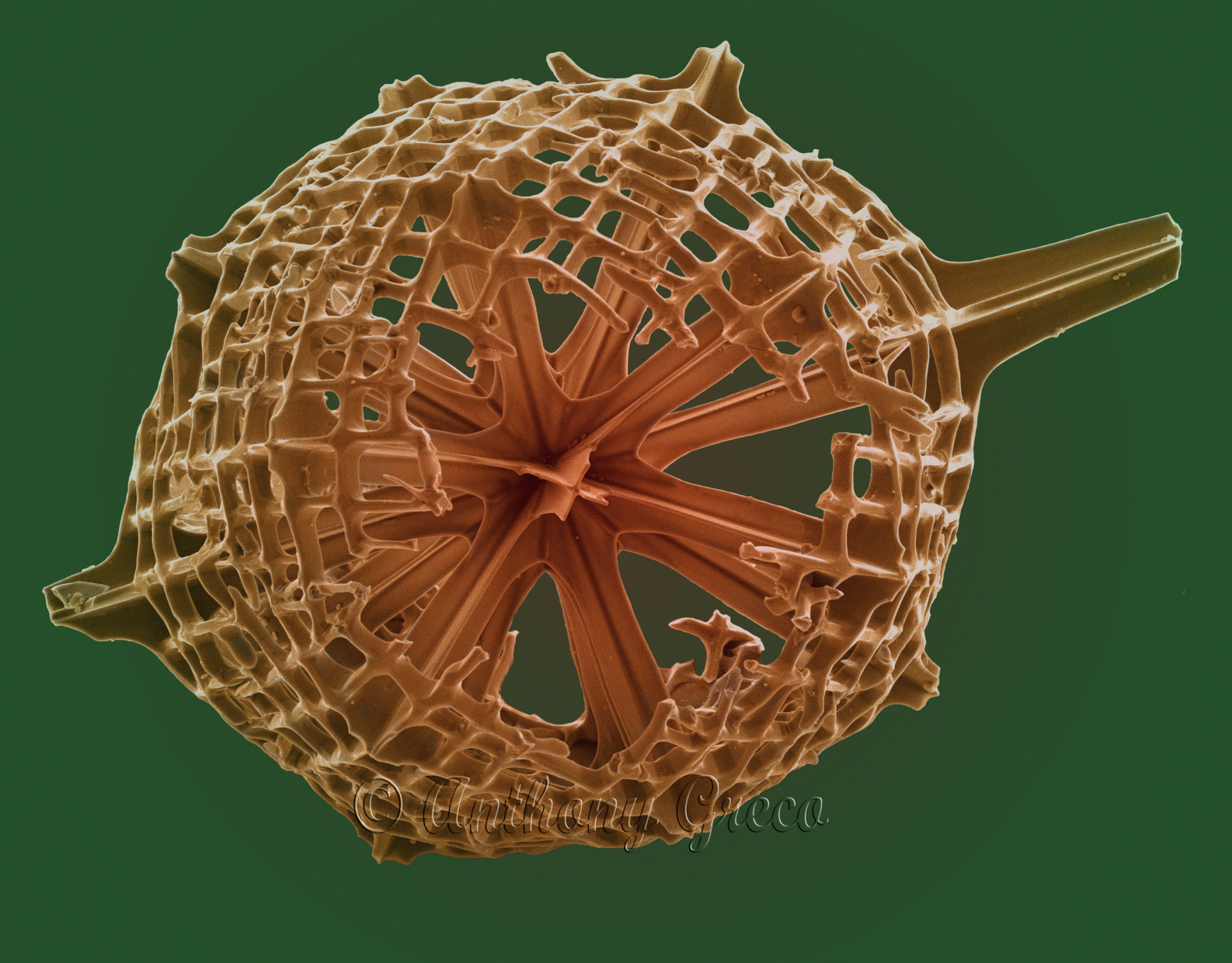
Broken Acantharian shell
internal structure is revealed showing the 20 spines originating from a common point in the center
-
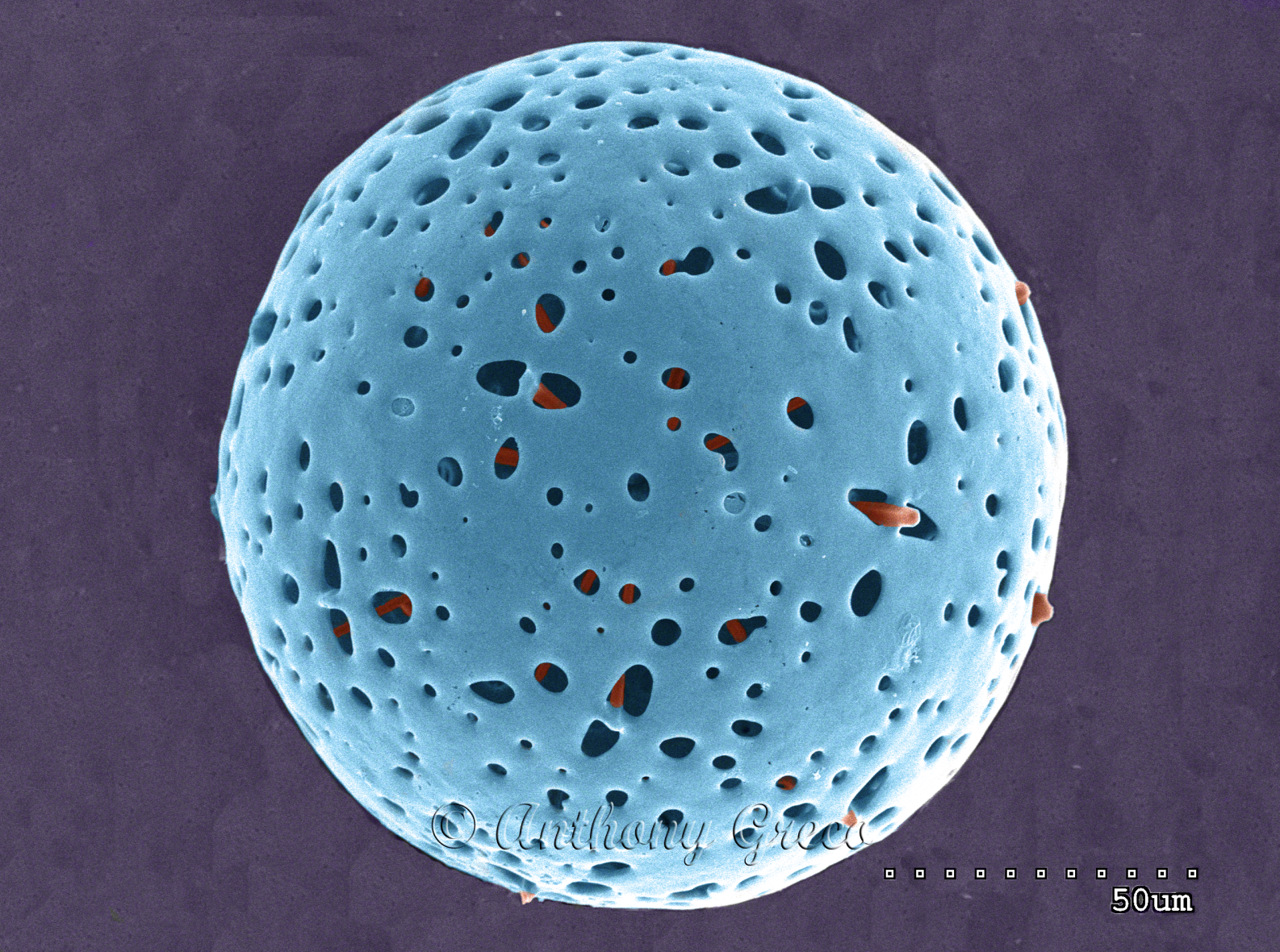
Acantharian cyst
a few of the retracted spines (pink) are visible through the larger pore openings
-
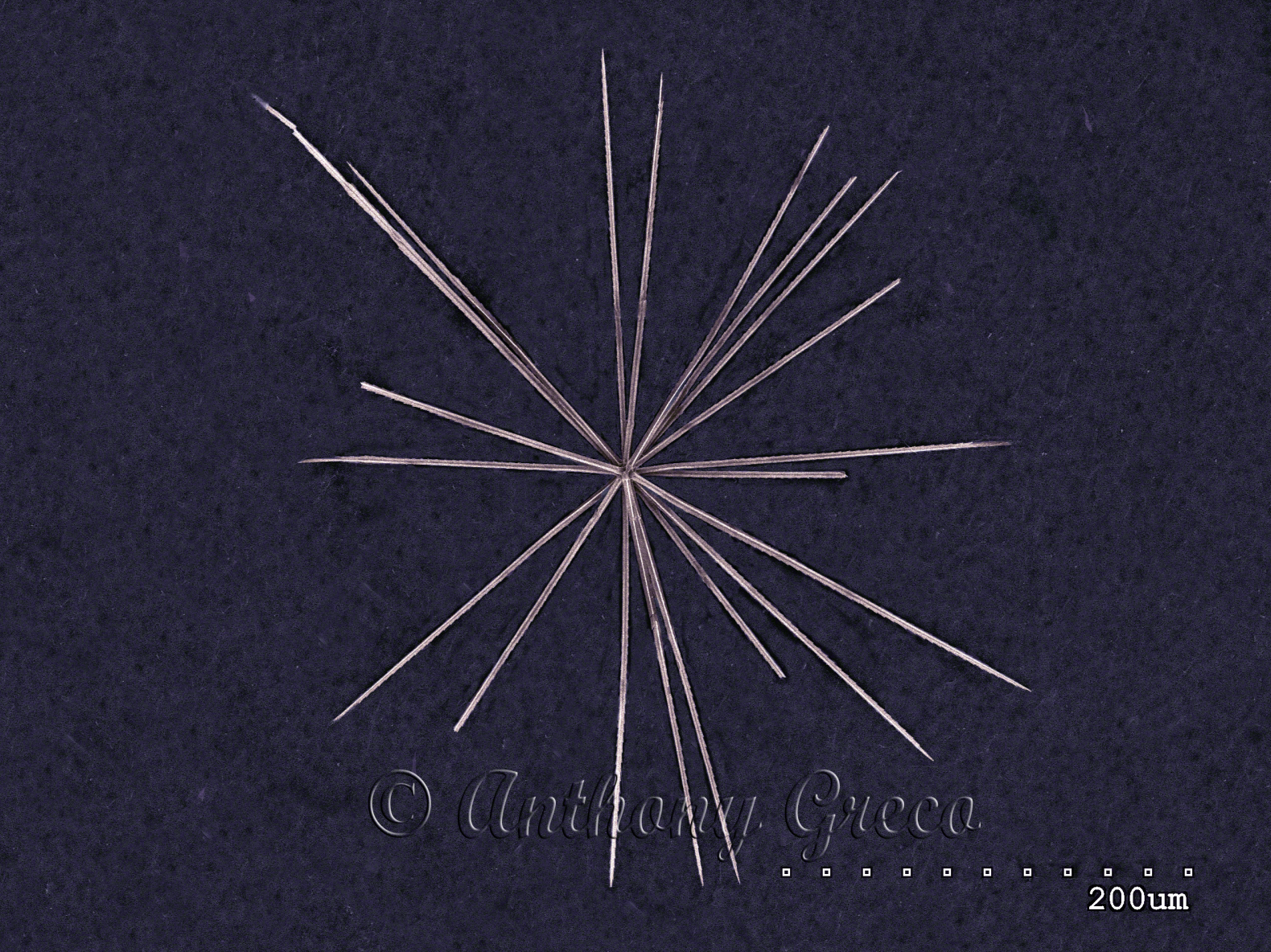
Acantharian
-
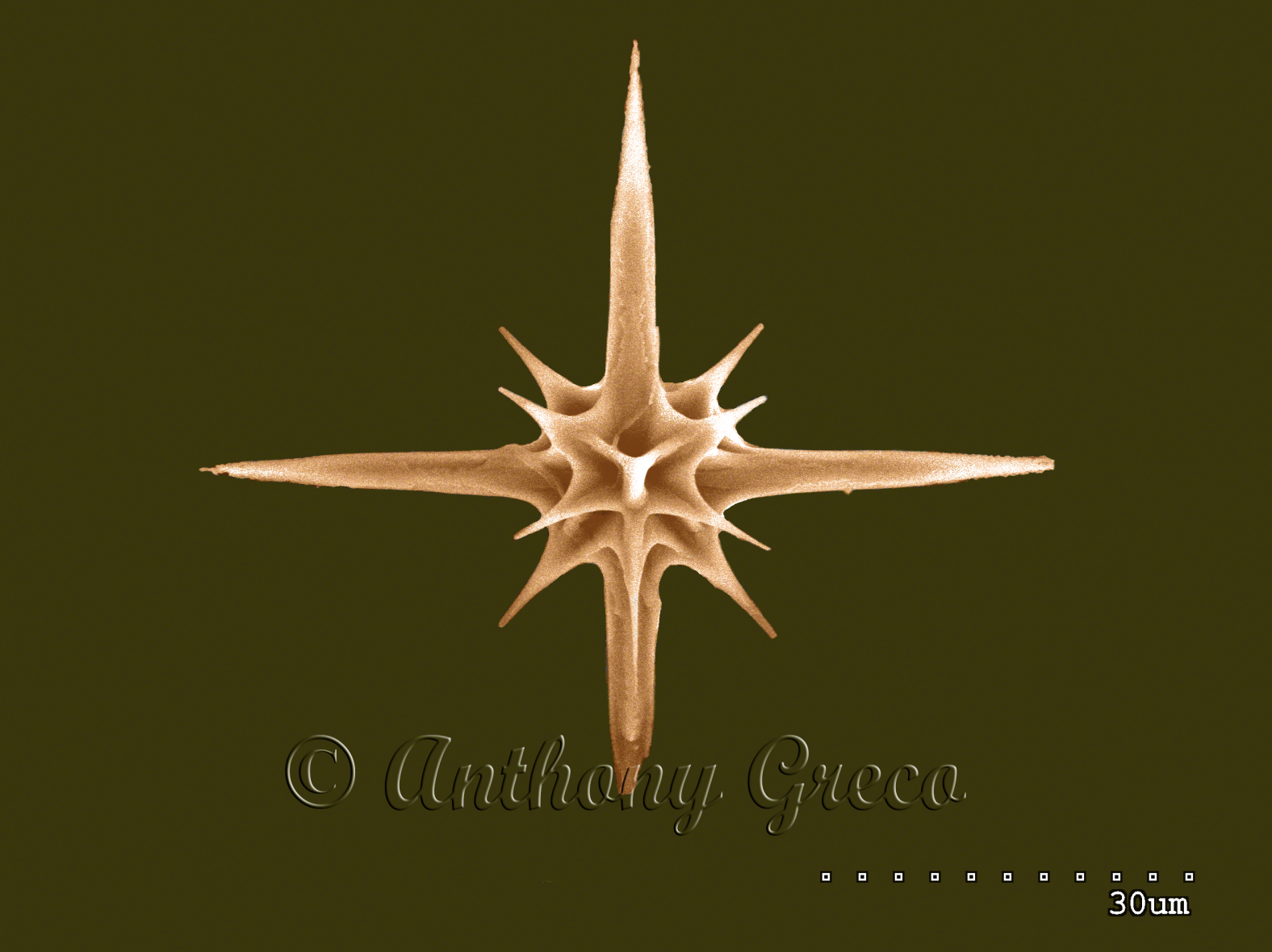
Acantharian
very symmetric spine structure